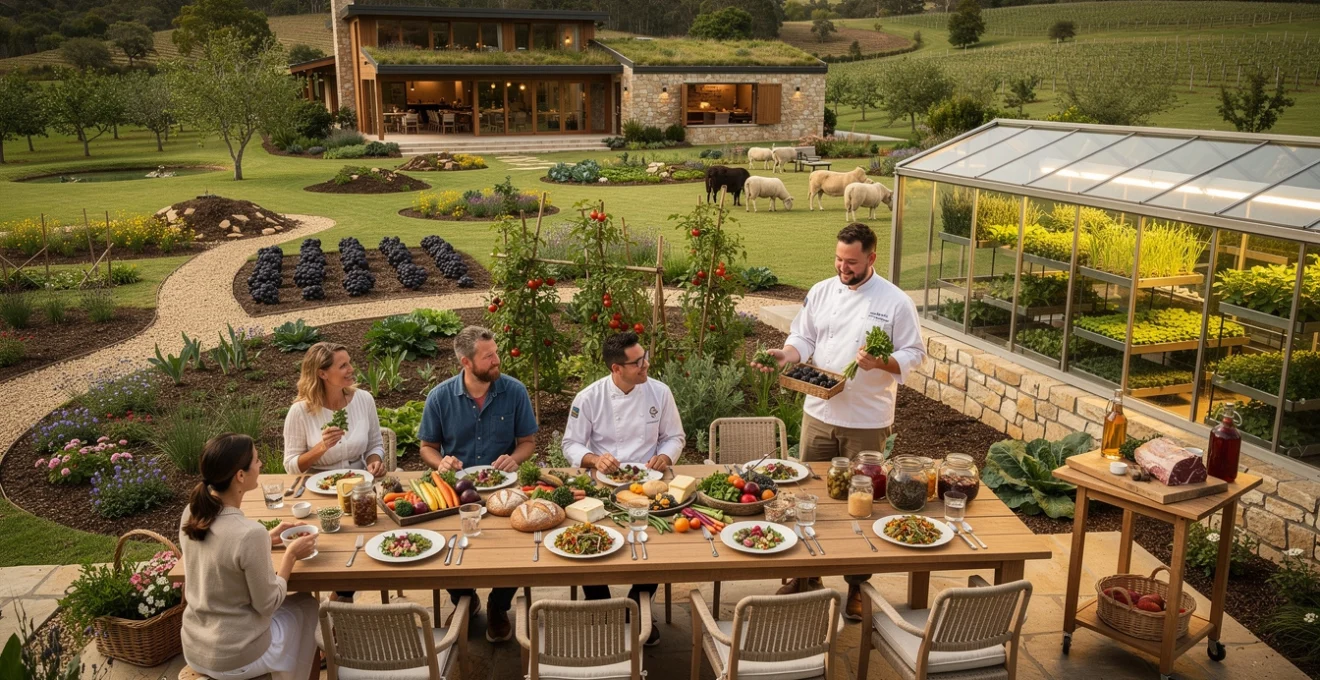
The way we think about luxury dining whilst travelling has undergone a profound transformation. No longer satisfied with merely tasting regional specialities from restaurant menus, today’s discerning travellers seek authentic connections with the land, the farmers, and the intricate processes that bring food from soil to plate. This shift represents more than a passing trend—it reflects a fundamental reimagining of what constitutes meaningful hospitality and culinary excellence. Farm-to-table experiences at destination properties now offer immersive journeys that educate, inspire, and forge lasting connections between guests and the agricultural ecosystems that sustain them.
The rise of hyper-local dining at luxury resorts and destination restaurants has coincided with growing awareness of food systems’ environmental impact. According to recent industry research, approximately 68% of affluent travellers now consider a property’s sustainability practices when making booking decisions, with farm-to-table dining programmes ranking amongst the most valued amenities. These experiences transcend simple menu sourcing; they encompass comprehensive agricultural operations, educational programming, and circular economy principles that challenge conventional hospitality models.
Biodynamic agriculture principles in luxury Farm-to-Table resort operations
Biodynamic agriculture represents the most holistic approach to sustainable farming, treating the entire property as a living, self-sustaining organism. Leading farm-to-table resorts have embraced these principles, implementing comprehensive systems that go far beyond organic certification. The biodynamic method, developed in the 1920s, emphasises cosmic rhythms, soil vitality, and closed-loop nutrient cycles—concepts that might initially seem esoteric but deliver measurably superior results in flavour intensity and nutritional density.
What distinguishes biodynamic operations from conventional organic farming is the philosophical framework. Every element within the farm ecosystem serves multiple functions, creating resilient systems that require minimal external inputs. Livestock grazing patterns fertilise future vegetable beds, composting systems transform kitchen waste into soil amendments, and lunar planting calendars optimise germination rates. For guests, the visible results manifest in vegetables with concentrated flavours and textures that simply cannot be replicated through industrial agriculture.
Regenerative soil management techniques at blackberry farm, tennessee
Blackberry Farm has pioneered regenerative agriculture within the luxury hospitality sector, implementing soil management practices that actively reverse environmental degradation. Their approach centres on building soil organic matter through diverse cover cropping, minimal tillage, and strategic livestock integration, guided by agro-ecological frameworks for soil regeneration. By measuring soil carbon sequestration rates annually, the property demonstrates how hospitality operations can become net-positive environmental contributors rather than extractive enterprises.
The estate’s soil health directly translates to superior ingredient quality. Chefs working with Blackberry Farm’s produce consistently report that vegetables grown in biologically active, carbon-rich soil possess flavour profiles unattainable through conventional methods. Tomatoes exhibit greater umami complexity, root vegetables develop enhanced natural sweetness, and leafy greens maintain superior texture even days after harvest. These measurable quality differences justify the significant investment in regenerative soil programmes.
Seasonal crop rotation calendars for estate kitchen gardens
Sophisticated crop rotation systems form the backbone of successful estate gardens, preventing soil depletion whilst naturally suppressing pests and diseases. Rather than following generic agricultural guidelines, leading farm-to-table properties develop customised rotation calendars aligned with both ecological principles and culinary programming needs. This strategic planning ensures that peak-season menus feature ingredients at their absolute flavour zenith whilst maintaining long-term soil fertility.
A well-designed rotation calendar typically operates on four-year cycles, alternating heavy feeders like brassicas with nitrogen-fixing legumes, followed by light-feeding crops and soil-building cover crops. The complexity increases when coordinating these rotations with guest experience expectations—summer tasting menus require abundant tomatoes and courgettes, whilst autumn programmes depend on squash and root vegetable availability. Achieving this balance demands sophisticated planning that begins years before guests arrive.
Heritage seed preservation programs at single thread farms, sonoma
Single Thread Farms has garnered international recognition for their commitment to preserving endangered vegetable varieties through active cultivation and seed saving. Their five-acre farm maintains over 200 heritage cultivars, many sourced from seed libraries and conservation organisations worldwide.
Many of these varieties have been selected not for yield or uniform appearance, but for nuanced flavour, resilience, and cultural significance. By saving seed from the best-performing plants each season, the team gradually adapts these cultivars to Sonoma’s specific microclimate, creating what agronomists call “site-specific landraces.” For guests, this translates into tasting experiences that are impossible to replicate elsewhere: a particular tomato that only expresses its full sweetness in the morning fog of the Russian River Valley, or a rare Japanese brassica whose texture reflects years of careful selection. In an era when global agriculture often prioritises uniformity, such heritage seed programmes safeguard biodiversity while elevating farm-to-table dining to a form of living conservation.
Single Thread’s model also offers a blueprint for other luxury farm resorts looking to embed biodiversity into their operations. Rather than relying solely on commercial seed catalogues, properties can develop small on-site seed banks, collaborate with regional seed exchanges, and integrate seed-saving into guest programming. When diners learn that the squash on their plate comes from seeds saved by the farm team—and that their feedback on flavour will help decide what is grown next year—the menu becomes part of a longer, regenerative story rather than a one-off culinary event.
Permaculture design integration in resort landscape architecture
While kitchen gardens and orchards often sit at the heart of farm-to-table resorts, the most forward-thinking properties apply permaculture principles across their entire landscape architecture. Instead of separating “productive” areas from ornamental zones, designers use layered plantings, water-harvesting earthworks, and habitat corridors to create beautiful spaces that also perform ecological functions. Swales and rain gardens capture stormwater for slow infiltration, food forests provide shade and seasonal fruit, and hedgerows double as windbreaks and wildlife habitat.
For guests, these landscapes feel less like manicured golf courses and more like immersive, walkable ecosystems. Pathways wind past pollinator meadows, medicinal herb spirals, and mixed-species orchards where chickens graze beneath trees, reducing pests and fertilising the soil. You might not realise you are walking through a highly technical design, yet every element—from the placement of a bench to the curve of a pond—has been planned to maximise energy efficiency and ecological resilience. This integration of permaculture into resort masterplans turns the grounds themselves into an educational canvas, showing how regenerative thinking can be both functional and visually stunning.
Hyper-local ingredient sourcing models across destination properties
The most compelling farm-to-table experiences increasingly move beyond vague references to “local produce” and towards hyper-local ingredient sourcing models. In practice, this means that the majority of ingredients are grown on-site or procured from producers within a very tight radius—often 50 kilometres or less. By shortening supply chains, destination restaurants reduce food miles, support regional agricultural economies, and gain unparalleled control over freshness and variety.
Hyper-local sourcing also allows chefs and farmers to co-create menus from the ground up. Instead of ordering what the market happens to offer, teams design planting schedules, livestock rotations, and preservation plans around anticipated tasting menus. This collaborative approach can feel more like composing a symphony than writing a standard restaurant order sheet: each ingredient has a season, a role, and a moment to shine. For guests, the result is a dining experience that feels inextricably linked to the surrounding landscape and climate—it would be impossible to transplant it wholesale to another region.
On-site greenhouse production systems at blue hill at stone barns, new york
Blue Hill at Stone Barns has become a global benchmark for integrated farm-restaurant ecosystems, and its on-site greenhouse systems are central to this achievement. Rather than treating greenhouses as mere season extenders for standard crops, the team uses them as experimental laboratories for flavour, texture, and nutrition. Carefully calibrated temperature, humidity, and light regimes allow for precision cultivation of delicate greens, herbs, and specialty vegetables that would struggle outdoors in New York’s variable climate.
These controlled environments also enable continuous research into varietal performance and sustainable production methods. Chefs and growers collaborate on taste trials, comparing different cultivars of the same crop for sweetness, bitterness, or aromatic complexity. If you have ever wondered why a simple salad at Blue Hill tastes so layered and alive, the answer often lies in months of iterative experimentation in the glasshouse. By investing in sophisticated greenhouse infrastructure, luxury farm resorts can offer year-round farm-to-table dining without resorting to long-distance imports.
Artisanal dairy operations and cheese-making facilities at farm resorts
Artisanal dairy programmes are increasingly becoming a hallmark of destination farm resorts, bringing the journey from pasture to plate into clear view. Small herds of cattle, goats, or sheep graze rotationally managed pastures, converting diverse forage into milk rich with regional character. On-site creameries then transform this milk into yogurts, fresh cheeses, and long-aged wheels that anchor breakfast buffets, tasting menus, and wine pairings.
From an operational standpoint, integrating dairy and cheese-making allows properties to close additional nutrient loops. Whey from cheese production feeds pigs or becomes a base for fermented beverages, while manure from the herd returns to the fields as compost. Guests might spend a morning learning to hand-stretch mozzarella or observing an affineur brushing aging rinds in a cave-like cellar. Such experiences demystify the craft behind dairy products that many of us take for granted, turning a simple cheese course into a narrative of land stewardship and patient transformation.
Wild foraging programs with certified mycologists and botanists
For travellers seeking truly immersive farm-to-table experiences, guided wild foraging programmes offer a powerful way to connect cuisine with the wider ecosystem. Under the supervision of certified mycologists and botanists, guests venture into surrounding forests, meadows, and coastlines to identify edible mushrooms, wild herbs, berries, and sea vegetables. Safety is paramount; reputable resorts ensure that only qualified experts lead these excursions, with strict protocols for plant identification and harvesting limits.
What makes these programmes so compelling is the sense of discovery they foster. When you later encounter chanterelles you helped collect, folded into a silky sauce or perched atop a wood-fired tart, the dish carries a personal story. It also highlights the importance of ethical harvesting and habitat protection—topics that guides weave into their commentary. In a world where so much of our food arrives pre-packaged and anonymous, wild foraging invites you to see the landscape itself as a living pantry, one that must be treated with reverence rather than exploited.
Indigenous ingredient partnerships at azurmendi restaurant, basque country
Azurmendi, nestled in the hills above Bilbao, exemplifies how destination restaurants can build meaningful partnerships around indigenous ingredients. Rather than simply sourcing “local” products, chef Eneko Atxa and his team work directly with Basque farmers, seed custodians, and foragers to revive traditional crops and techniques. Ancient varieties of beans, peppers, and corn—once at risk of disappearing—now feature prominently in tasting menus that feel both avant-garde and deeply rooted in place.
These collaborations extend beyond transactional purchasing agreements. Azurmendi invests time and resources into research projects, supporting farmers as they transition to more resilient, regenerative practices. Guests might tour a nearby vineyard cultivating native grape varieties or visit small-scale producers who supply specific elements of the meal. This model of indigenous ingredient partnership transforms farm-to-table dining into a form of cultural preservation and economic empowerment, ensuring that local foodways remain vibrant for generations to come.
Immersive culinary education programmes for resort guests
One of the most significant shifts in high-end hospitality over the past decade has been the move from passive consumption to active participation. Today’s guests do not simply want to be served; they want to understand, to learn, and to take skills home with them. In response, leading farm-to-table resorts have developed comprehensive culinary education programmes that range from introductory garden walks to in-depth residencies with chefs and agronomists.
These offerings serve multiple purposes at once. They deepen guest engagement, differentiate properties in a crowded market, and cultivate a community of informed advocates for sustainable food systems. Perhaps most importantly, they turn the resort kitchen and farm into open classrooms, breaking down the traditional divide between “back of house” operations and the guest experience. When you have harvested, cooked, and tasted ingredients yourself, you perceive the restaurant’s tasting menu through an entirely new lens.
Hands-on harvesting experiences in organic vegetable gardens
Hands-on harvesting remains one of the most accessible and impactful educational tools for farm resorts. Under the guidance of garden managers, guests step into orderly beds and polyculture plots to pick tomatoes at peak ripeness, pull carrots from friable soil, or snip herbs whose aromas release instantly upon cutting. This simple act of harvesting—something many urban visitors have never done—reframes ingredients as living organisms rather than anonymous commodities.
Resorts often integrate these harvesting sessions directly into meal preparation. The vegetables you gather in the morning might appear on your plate at lunch, dressed lightly to showcase their natural character. Some properties provide small harvesting journals or seasonal calendars, encouraging you to note which crops are at their best during each month. The experience is both meditative and informative, reminding us that great farm-to-table dining begins long before a dish reaches the pass.
Masterclass sessions with executive chefs and agronomists
To go deeper, many destinations now offer structured masterclasses that bring together executive chefs and agronomists in the same room. These sessions might explore topics such as soil-plant flavour dynamics, advanced preservation techniques, or menu design based on regenerative agriculture principles. By pairing culinary talent with scientific expertise, resorts can explain not just how to cook an ingredient, but why it tastes the way it does.
Imagine, for instance, a workshop where an agronomist demonstrates the impact of different cover crops on soil microbiology, followed by the chef preparing three carrot dishes sourced from plots with varying soil management histories. Guests taste the differences side by side, experiencing terroir at a micro-scale. This kind of integrated education demystifies complex concepts and shows how decisions in the field reverberate all the way to the dining room. It also equips guests with questions they can ask at restaurants back home, gently nudging demand toward more transparent, sustainable sourcing.
Fermentation workshops: kimchi, kombucha, and sourdough techniques
Fermentation has moved from niche interest to mainstream fascination, and farm resorts are ideally placed to harness this momentum. Workshops on kimchi, kombucha, miso, and sourdough offer a practical way for guests to preserve the flavours of the estate long after they return home. Using surplus or cosmetically imperfect produce from the farm, instructors teach basic microbiology, salt ratios, and safety techniques, turning what might have been food waste into high-value pantry staples.
From a sustainability perspective, fermentation is a powerful ally: it extends shelf life, enhances nutritional bioavailability, and reduces reliance on energy-intensive cold storage. From a guest’s perspective, it feels almost magical—like learning a slow, edible form of alchemy. When you bake bread with a starter nurtured on-site or sip kombucha flavoured with garden herbs, you internalise the idea that farm-to-table dining can continue in your own kitchen. Resorts that send visitors home with starter cultures or recipe booklets effectively extend the guest experience into daily life.
Butchery demonstrations and whole-animal utilisation practices
Whole-animal butchery demonstrations represent one of the more advanced, and often most transformative, components of a culinary education programme. Led by head butchers or chefs, these sessions walk guests through the respectful breakdown of an animal sourced from the property’s own livestock or trusted local farms. Careful attention is paid to welfare standards, slaughter practices, and the ethical implications of meat consumption, ensuring the experience is informative rather than purely theatrical.
The educational focus lies in showing how every part of the animal can be honoured and used—from prime cuts destined for the grill to bones for stock, offal for pâtés, and trimmings for sausages or charcuterie. In an industry where up to 30% of meat can be lost as waste along the supply chain, whole-animal practices dramatically improve resource efficiency. For guests, witnessing this process often catalyses a more mindful approach to ordering and consumption; a perfectly cooked steak tastes different when you understand the full story behind it.
Zero-kilometre menu development and seasonal tasting experiences
The concept of zero-kilometre cuisine takes farm-to-table dining to its logical extreme by prioritising ingredients grown, raised, or foraged on the property itself—or, at most, sourced from immediate neighbours. In parts of Europe, particularly Italy and Spain, “0 km” has become a recognised label signifying ultra-short supply chains and radical transparency. For destination restaurants and resorts, adopting this philosophy requires rethinking menu development from first principles.
Instead of designing a fixed signature menu and then sourcing ingredients to match, chefs start with what the land is capable of providing at any given moment. Seasonal tasting menus change not just four times a year, but often week by week, reflecting subtle shifts in weather, soil moisture, and plant maturity. This level of responsiveness can be logistically demanding—kitchens must be agile, and service staff highly trained—but it also yields extraordinary culinary moments. Guests may find themselves tasting the first asparagus of spring or the final figs of autumn precisely on the day they reach their peak.
Zero-kilometre menus also encourage creative preservation strategies to bridge the leaner months. Fermented vegetables, dried herbs, cured meats, and cellared root crops allow chefs to honour seasonality without compromising variety. When a winter dish pairs house-cured guanciale with polenta made from heritage corn grown and milled on-site, every component carries a traceable, hyper-local story. The question shifts from “What do we feel like cooking?” to “What is the landscape offering us right now?”—a subtle but profound change in mindset.
Traceability technology and transparent supply chain communication
As diners become more conscious of where their food comes from, traceability has emerged as a critical pillar of credible farm-to-table operations. Luxury resorts are increasingly adopting digital tools—from QR-coded menus to blockchain-backed provenance systems—to document and share the journey of ingredients from field to fork. While such technology might sound complex, the goal is simple: to replace generic claims of “local” or “sustainable” with verifiable, easily understandable information.
In practice, this could mean that scanning a code on your menu reveals the plot where your carrots were grown, the date they were harvested, and the regenerative practices used on that field. Some properties integrate interactive screens in wine cellars, allowing guests to explore vineyard maps, soil types, and grower profiles. Others publish seasonal impact reports summarising water usage, waste diversion rates, and carbon metrics associated with their food and beverage programmes. When transparency becomes the norm, greenwashing becomes harder, and genuine stewardship stands out.
Importantly, effective communication around traceability balances detail with narrative. Most guests do not want to wade through raw data during dinner; they want stories that make the numbers meaningful. This is where well-trained front-of-house teams play a pivotal role, translating supply chain information into concise anecdotes: the baker who mills grain at dawn, the cheesemaker ageing wheels in a converted stone barn, the market gardener experimenting with no-dig beds. By the end of the meal, you feel not just satisfied, but connected to a network of real people and places behind each course.
Carbon-neutral kitchen operations and circular economy practices at farm restaurants
The final frontier for many farm-to-table resorts lies in decarbonising their kitchen operations and embracing circular economy principles. While sourcing local and organic ingredients is a crucial first step, the energy and resources used in cooking, cleaning, and waste management can still carry a significant environmental footprint. Forward-looking properties are therefore re-evaluating everything from equipment choices to menu engineering through a climate-conscious lens.
Practical measures include transitioning to induction cooktops powered by renewable energy, optimising refrigeration systems, and implementing heat recovery technologies that capture and reuse waste warmth from ovens or dishwashers. Some resorts conduct detailed carbon audits of their menus, identifying high-impact dishes and redesigning them to feature more plant-based components or lower-emission proteins. Others set internal targets—such as reducing kitchen-related emissions by 50% over five years—and report transparently on their progress.
Circular economy practices further enhance this transformation by ensuring that resources circulate within the system for as long as possible. Vegetable trimmings become stocks and sauces; spent coffee grounds feed mushroom cultivation; greywater irrigates ornamental plantings after appropriate treatment. In certain pioneering projects, on-site anaerobic digesters convert organic waste into biogas for cooking and nutrient-rich digestate for fields, closing loops in a tangible way. When you dine at such a restaurant, you are not just enjoying a meal—you are participating in a living experiment in regenerative hospitality.
Ultimately, farm-to-table experiences that embrace carbon-neutral operations and circular systems demonstrate that luxury and responsibility are not mutually exclusive. On the contrary, the most memorable meals of the future are likely to be those where exquisite flavours coexist with a light environmental footprint, where every course tells a story of collaboration between chefs, farmers, and the ecosystems that sustain them. As travellers, when we choose these destinations and ask thoughtful questions, we help ensure that this vision moves from niche aspiration to industry standard.