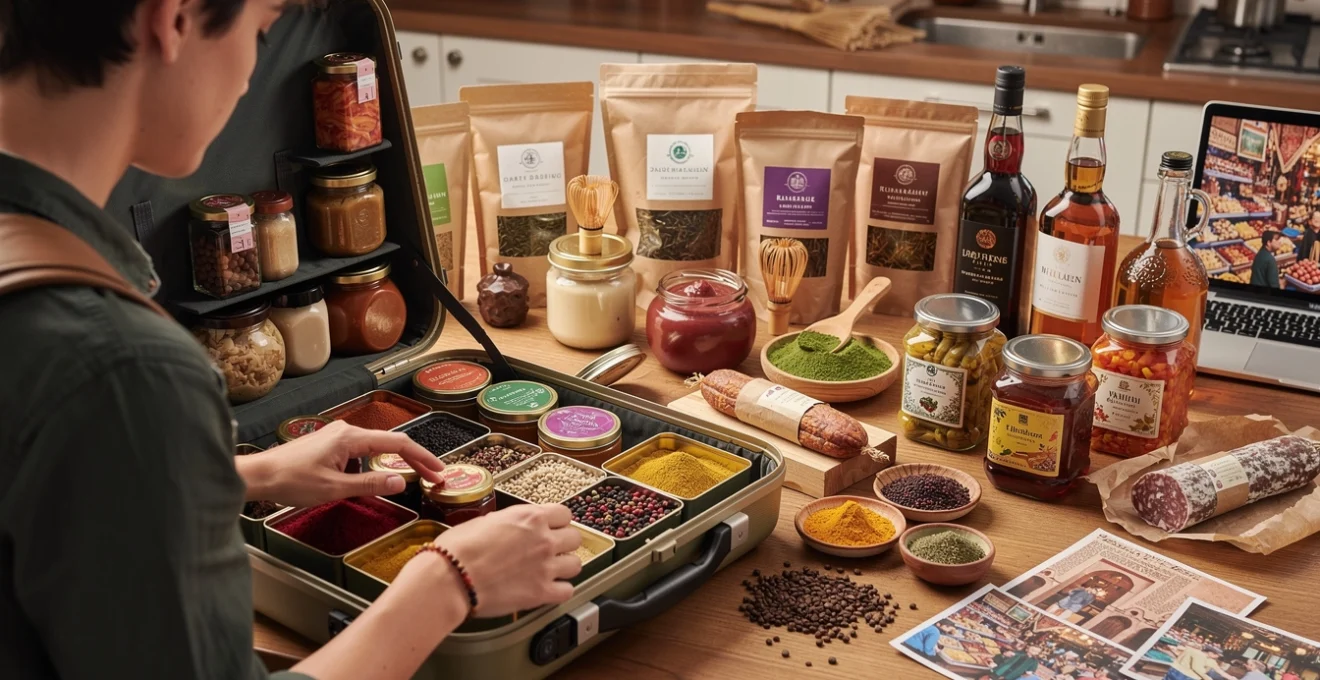
The art of collecting culinary souvenirs transforms travel experiences into lasting memories that extend far beyond passport stamps and photographs. Bringing home authentic flavours, spices, and delicacies creates an edible diary of adventures, allowing you to recreate those extraordinary moments in your own kitchen. These gastronomic treasures serve as powerful reminders of cultural encounters, local traditions, and the passionate artisans who craft them. From bustling spice markets in Marrakech to artisanal tea gardens in the Himalayas, each destination offers unique culinary gifts that capture the essence of place in ways that conventional souvenirs simply cannot match.
Modern travellers increasingly seek meaningful connections with local food cultures, moving beyond tourist trinkets to embrace authentic culinary experiences. The growing popularity of food tourism has created new opportunities to discover regional specialities, traditional production methods, and time-honoured recipes passed down through generations. Whether you’re wandering through Vietnamese wet markets or exploring European charcuteries, the right culinary souvenir becomes a bridge between cultures, bringing distant flavours directly to your dining table.
Artisanal spice blends and exotic seasonings from global markets
Spice markets around the world represent vibrant hubs of culinary culture, where centuries-old trading routes converge to create aromatic symphonies of flavour. These bustling bazaars offer travellers access to rare seasonings, traditional spice blends, and exotic ingredients that remain virtually impossible to source elsewhere. The sensory experience of navigating spice markets—from the visual feast of colourful powders to the intoxicating aromas that fill the air—creates memories that last a lifetime. Professional chefs and home cooks alike recognise that authentic spices purchased directly from their regions of origin possess unmatched quality and potency compared to mass-produced alternatives.
Understanding the provenance of spices enhances both their culinary value and their significance as cultural artifacts. Many traditional spice blends reflect generations of refinement, with recipes closely guarded by families and passed down through oral tradition. When you purchase spices from local vendors, you’re not merely acquiring seasoning; you’re investing in cultural heritage and supporting traditional farming practices that maintain biodiversity in spice cultivation. The terroir concept, typically associated with wine, applies equally to spices, where soil conditions, climate, and traditional processing methods create distinctive flavour profiles that cannot be replicated elsewhere.
Authentic ras el hanout from marrakech souks and fez medinas
Ras el hanout, literally meaning “head of the shop” in Arabic, represents the pinnacle of Moroccan spice artistry. This complex blend typically contains between twelve and thirty different spices, with each vendor maintaining their own secret proportions and ingredients. The most prized versions include expensive spices such as rose petals, lavender, and occasionally even Spanish fly, creating a unique aromatic profile that varies dramatically between different spice merchants. Purchasing ras el hanout directly from Moroccan souks ensures authenticity and freshness that commercial versions cannot match.
The traditional preparation of ras el hanout involves grinding whole spices daily, preserving essential oils and aromatic compounds that dissipate quickly in pre-ground mixtures. Experienced spice merchants can customise blends according to specific culinary applications, whether for tagines, couscous, or grilled meats. When selecting ras el hanout, look for vendors who grind spices fresh and avoid pre-packaged options that may have lost their potency during storage and transport.
Premium saffron procurement from kashmir and iranian bazaars
Saffron stands as the world’s most expensive spice by weight, with authentic varieties from Kashmir and Iran commanding premium prices due to their superior quality and labour-intensive harvesting methods. Kashmiri saffron, known locally as “kong posh,” produces distinctive deep red threads with exceptional colouring strength and a sweet, hay-like aroma. Iranian saffron, particularly from the Khorasan province, offers similar quality with slightly different flavour characteristics, making both varieties highly sought after by culinary professionals worldwide.
Authentic saffron identification requires careful examination of thread appearance, aroma, and colour intensity.
Authentic threads should appear uniformly deep red with slightly lighter, trumpet-shaped tips and release a strong aroma even before steeping. Avoid powdered saffron, which is easy to adulterate, and be wary of unusually low prices or threads that look uniformly bright red and brittle. To preserve quality, store saffron in a small airtight container away from light and heat, and use it sparingly—just a few threads steeped in warm water or milk can perfume an entire dish. When transporting saffron home, keep it in its original sealed packaging to protect the delicate stigmas and to make customs inspections straightforward.
Specialty peppercorn varieties from kampot and tellicherry plantations
Pepper may seem commonplace, but true pepper enthusiasts know that single-origin peppercorns from regions like Kampot in Cambodia and Tellicherry on India’s Malabar Coast are anything but ordinary. Kampot pepper, protected by a geographical indication (GI), is prized for its complex floral notes, gentle heat, and subtle sweetness. Tellicherry peppercorns, harvested when fully ripe, are larger and more aromatic than standard black pepper, with warm, citrusy undertones and a lingering finish. Picking up small vacuum-sealed bags or tins directly from plantations or reputable cooperatives allows you to taste pepper as it was meant to be: fresh, nuanced, and intensely aromatic.
When selecting peppercorns as culinary souvenirs, look for whole, uniform berries with a glossy, slightly wrinkled surface and a pronounced aroma when lightly crushed. Avoid packages where the pepper looks dull, dusty, or contains excessive broken fragments, as this often signals age or poor handling. Whole peppercorns, unlike pre-ground pepper, maintain their essential oils for months, even years, if stored in an airtight container away from heat and light. A simple hand grinder or mortar and pestle at home will allow you to release their full flavour just before serving, instantly elevating everything from grilled meats to simple eggs or roasted vegetables.
Traditional curry powder compositions from tamil nadu and kerala regions
Curry powder is often misunderstood in the West as a generic blend, but in South India, especially across Tamil Nadu and Kerala, traditional masala mixes are deeply regional, each crafted for specific dishes and cooking methods. You’ll encounter blends like sambar podi, rasam powder, and fish masala, each calibrated for balance between heat, acidity, and aroma. Local millers and small family-run shops roast and grind whole spices—coriander, cumin, fenugreek, dried chillies, black pepper, mustard seeds, and curry leaves—on a daily basis, resulting in intensely fragrant powders that far surpass supermarket versions.
To bring home the best curry powders from your travels, buy small quantities from high-turnover shops where you can smell the blends before you commit. Ask vendors which specific dishes each masala is intended for, and take photos of the labels or jot down names so you can look up recipes later. Because freshly ground curry powders contain volatile oils that can dissipate quickly, plan to use them within a few months of your return and consider dividing them into smaller airtight containers. For air travel, double-bag powders in zip-top bags and place them in checked luggage to minimise the risk of spills and avoid issues at security.
Heritage sumac and za’atar collections from levantine street vendors
In the Levant—Lebanon, Jordan, Palestine, and parts of Syria—sumac and za’atar are more than seasonings; they are everyday staples woven into the fabric of local cuisine. Sumac, a tangy crimson powder made from dried berries, adds a lemony brightness to salads, grilled meats, and dips without the sharp acidity of citrus juice. Za’atar, traditionally a mixture of wild thyme or oregano, sesame seeds, sumac, and salt, varies from village to village, with families fiercely loyal to their preferred ratios. Purchasing these spice souvenirs directly from street vendors and small grocers allows you to taste the nuanced differences between blends that industrial versions tend to flatten.
When shopping for sumac, choose a deep, wine-red powder with a coarse texture and a clean sour aroma; avoid versions that look brownish or overly fine, as these may be old or diluted with salt. For za’atar, look for visible sesame seeds and thyme leaves and ask whether the mix contains added fillers like wheat or breadcrumbs, which some commercial products use to cut costs. Both condiments are remarkably versatile once you get them home—sprinkled over hummus, whisked into vinaigrettes, or baked onto flatbreads with olive oil for a quick snack. To preserve their flavour, store them in airtight jars away from direct sunlight, and consider buying smaller amounts from multiple vendors so you can compare and discover your favourite blend.
Fermented condiments and preserved delicacies with extended shelf life
Fermented condiments and preserved foods make particularly smart culinary souvenirs because they combine bold flavour with impressive shelf stability. From miso and gochujang to cured meats and fish sauces, these products have been developed over centuries as ways to keep food safe and delicious without refrigeration. As you explore markets and delicatessens around the world, you’ll find that these fermented treasures encapsulate regional tastes in concentrated form—a spoonful of miso or a drizzle of fish sauce can instantly transport you back to the alleyways and eateries where you first tried them. Because they are generally sold in sealed jars, tubs, or vacuum packs, they also tend to travel well, provided you pack them with care.
Fermented foods are not only flavour powerhouses but also increasingly recognised for their potential health benefits. Global demand for probiotic-rich products has surged in recent years, with the fermented food market projected to grow steadily as consumers seek natural ways to support gut health. Yet, beyond the trend, these condiments retain their original purpose: adding depth, umami, and complexity to everyday dishes with minimal effort. When choosing fermented souvenirs, think about how often you cook at home and what flavours you enjoy most—there is little point in hauling back a kilo of pungent paste if you rarely prepare dishes that call for it.
Aged miso paste varieties from kyoto artisan producers
Kyoto’s artisanal miso producers treat soybean paste with the same reverence that winemakers reserve for their best vintages. You’ll encounter a wide range of styles—shiro (white), aka (red), and mixed miso—each aged for different lengths of time and crafted with varying ratios of soybeans, rice, and barley. Short-aged white miso tends to be sweet and mild, ideal for dressings and light soups, while long-aged red miso develops a deep, savoury intensity reminiscent of aged cheese or dark caramel. Visiting small miso breweries or specialty shops in Kyoto allows you to sample and compare different batches, often learning directly from producers whose families have been fermenting soybeans for generations.
When selecting miso as a travel-friendly food souvenir, favour products sold in vacuum-sealed pouches or sturdy tubs with clear labels indicating ingredients and ageing time. Pure miso made from soybeans, salt, and koji (the fermentation starter) will keep for months in the refrigerator, its flavour continuing to evolve slowly over time. To avoid leakage in your suitcase, wrap containers in a plastic bag and cushion them with clothing or bubble wrap. Back home, you can use miso far beyond soup—stir it into marinades, whisk it into salad dressings, or blend a spoonful with butter for an instant umami-rich spread.
Traditional kimchi and gochujang from seoul market stalls
In South Korea, few culinary souvenirs capture the country’s flavour profile as vividly as kimchi and gochujang. Traditional kimchi—fermented cabbage or radish seasoned with chilli, garlic, ginger, and fish sauce—is often sold in sealed jars or vacuum packs designed for travel, making it easier than ever to bring a taste of Seoul home. Gochujang, a thick, fermented chilli paste made from glutinous rice, soybeans, and red pepper, adds a slow-building heat and deep umami to everything from stews to grilled meats. Exploring markets like Gwangjang or Mangwon, you’ll find vendors offering house-made versions that differ from brand to brand, much like regional barbecue sauces.
Because kimchi is a live, actively fermenting product, you’ll need to check customs regulations before attempting to import it; some countries restrict fresh fermented vegetables, while shelf-stable or pasteurised versions may be allowed. Gochujang, by contrast, is usually easier to transport thanks to its dense texture and sealed packaging. When buying gochujang, look for products made with a higher proportion of chilli and fermented soybeans rather than added sugars or corn syrup, as these tend to offer more complex flavour. Once home, you can incorporate these Korean food souvenirs into your everyday cooking by stirring gochujang into mayonnaise for a quick spicy spread or adding a spoonful of kimchi to grain bowls, omelettes, or grilled cheese sandwiches.
European charcuterie and dry-cured sausages from tuscan norcerie
For meat lovers, few souvenirs rival the allure of dry-cured sausages and charcuterie from European regions like Tuscany. Traditional norcerie (pork butcheries) specialise in salumi such as finocchiona, soppressata, and aged salami, each seasoned with distinctive blends of fennel seeds, black pepper, garlic, wine, and local herbs. Thanks to their low moisture content and meticulous curing processes, many of these products have an extended shelf life, especially when vacuum-sealed, making them appealing options for travellers seeking robust, ready-to-slice flavours. Walking into a Tuscan norcineria is like stepping into a living museum of preservation techniques refined over centuries.
However, transporting cured meats across borders can be challenging, as many countries enforce strict biosecurity rules regarding animal products. Before buying charcuterie to take home, verify what is permitted in your destination—some nations allow commercially packaged, shelf-stable meats, while others prohibit any meat imports regardless of processing. If regulations are favourable, ask the butcher to vacuum-seal your chosen sausages and to provide labels clearly stating ingredients, curing methods, and origin. Once safely home, these delicacies can anchor an antipasto platter, elevate simple sandwiches, or be diced into pastas and stews, extending the pleasure of your Italian travels well beyond your return flight.
Pickled vegetables and fermented fish sauces from vietnamese markets
Vietnamese cuisine offers an extraordinary array of pickled vegetables and fermented condiments that make superb, long-lasting culinary souvenirs. In markets from Hanoi to Ho Chi Minh City, you’ll find jars of pickled carrots, daikon, mustard greens, and young papaya, all preserved in brine or vinegar with sugar and spices. These pickles add crunch and brightness to dishes like bánh mì and rice plates, and they travel well when sold in sealed glass or plastic containers. Perhaps the most iconic Vietnamese condiment, though, is fish sauce (nước mắm), particularly from renowned regions such as Phú Quốc, where anchovies and sea salt are aged in wooden barrels for up to a year.
Choosing fish sauce as a souvenir can feel overwhelming given the number of brands on the shelf, so look for labels that list only fish and salt as ingredients and indicate a high nitrogen level, which correlates with protein content and flavour intensity. High-quality fish sauce will be clear, amber-coloured, and free of sediment, with a deep savoury aroma that might be strong at first but mellows beautifully when used in cooking. Because liquids can pose a spill risk in luggage, double-bag bottles and pack them upright, cushioned between soft items. Once home, a splash of Vietnamese fish sauce can transform simple stir-fries, dipping sauces, and salads, acting like a culinary bridge back to the bustling markets where you first encountered its unmistakable aroma.
Regional tea cultivars and coffee bean origins
Tea and coffee are among the most transportable culinary souvenirs, combining practicality with an intimate connection to place. Unlike fresh produce or perishable pastries, high-quality loose-leaf tea and whole coffee beans are designed to travel, often arriving at markets and shops already vacuum-packed for export. Yet buying them at their source—on a misty plantation slope or in a local cooperative’s shop—adds another dimension, allowing you to learn about cultivation methods, harvest seasons, and roasting or processing techniques. Each cup you brew at home becomes a ritual that reconnects you with the landscapes and communities that produced your chosen leaves or beans.
As global interest in specialty coffee and single-origin tea has grown, many producers have begun offering detailed information about varietals, altitude, and processing, similar to the way wine labels highlight grape and terroir. For travellers, this means you can select souvenirs not just by country but by micro-region or even individual estate, tailoring your choices to your flavour preferences. Do you enjoy bright, citrusy coffees or deep, chocolatey ones? Delicate floral teas or robust, malty brews? By asking these questions at the source, you can curate a personal collection of beverage souvenirs that suit your palate while supporting ethical, often small-scale producers.
Single-estate darjeeling first flush from himalayan plantations
Darjeeling, often called the “champagne of teas,” produces some of the world’s most prized black and oolong teas, especially during the first flush in early spring. These initial harvests yield delicate leaves with floral, muscatel notes and a light golden liquor, quite unlike the strong, tannic teas many people associate with breakfast blends. Visiting estates in the Himalayan foothills allows you to taste first-flush teas side by side, often in airy tasting rooms overlooking the very slopes where they were picked. Buying directly from plantation shops ensures freshness, as first-flush teas tend to be released in limited quantities soon after harvest.
When selecting Darjeeling tea to bring home, opt for sealed foil pouches rather than decorative tins filled with loose leaves of uncertain age. Check labels for harvest date, flush, and estate name; reputable producers are proud to share this information. Because these teas are subtle and aromatic, they are best enjoyed within a year of purchase and brewed with slightly cooler water than typical black tea to avoid bitterness. A quiet afternoon at home with a pot of properly brewed Darjeeling can feel like a return to those misty mountain views, no plane ticket required.
Specialty oolong varieties from fujian province tea gardens
China’s Fujian province is the birthplace of many legendary oolong teas, including Tieguanyin, Da Hong Pao, and Shui Xian, each offering a different balance of floral, fruity, and roasted notes. Oolong tea processing is complex, involving partial oxidation, careful rolling, and repeated firing, more akin to artisanal baking than simple leaf drying. When you visit tea gardens or specialised shops in cities like Xiamen or Fuzhou, you’ll often be invited to participate in a traditional gongfu tea ceremony. This slow, mindful brewing method reveals how the same leaves can unfurl over multiple infusions, evolving in flavour with each steep.
As a food souvenir, high-grade oolong travels well provided it is vacuum-sealed and protected from light. Look for tightly rolled, glossy leaves with a strong aroma when you open the bag—fresh oolong should smell vibrant, whether that’s like orchids, roasted nuts, or ripe stone fruit depending on the style. Because brewing technique dramatically affects the flavour, it’s worth asking vendors for recommended parameters and taking photos of instructions if your language skills are limited. Back home, experimenting with gongfu-style brewing can become a form of armchair travel, turning your kitchen table into a mini Fujian tea house.
Ethiopian heirloom coffee beans from yirgacheffe cooperatives
For coffee enthusiasts, Ethiopia—often regarded as coffee’s birthplace—offers an unparalleled range of flavourful heirloom beans, especially from regions like Yirgacheffe, Sidama, and Harrar. Yirgacheffe coffees, often grown at high altitude and processed using washed or natural methods, are known for their bright acidity and distinctive notes of jasmine, citrus, and stone fruit. Visiting local cooperatives or small roasteries allows you to taste different lots and learn how processing choices affect the cup, from fruity natural-process coffees to clean, tea-like washed varieties. Buying beans at the source often means greater freshness and a more direct contribution to farming communities.
When purchasing Ethiopian coffee as a travel souvenir, choose whole beans rather than pre-ground, and look for roast dates where possible—coffee’s aromatic peak typically occurs within a few weeks of roasting. Because roasting styles in origin countries may be lighter than what you’re used to, ask whether the profile suits espresso, filter, or traditional Ethiopian brewing methods. To protect quality in transit, pack beans in their original one-way valve bags and keep them in your carry-on rather than a hot car boot or checked luggage on long layovers. Each time you grind and brew these beans at home, you’ll be reminded not just of their flavour but of the Ethiopian coffee ceremony tradition, where sharing a pot is as much about hospitality as it is about caffeine.
Ceremonial grade matcha from uji district producers
Japan’s Uji district, near Kyoto, is synonymous with high-quality matcha, the finely milled green tea powder used in traditional tea ceremonies. Ceremonial-grade matcha is made from shade-grown tea leaves that are carefully de-veined and stone-ground into an ultra-fine powder, resulting in a vivid green colour, creamy texture, and rich umami flavour with minimal bitterness. Visiting Uji’s tea shops and small producers allows you to compare grades—from everyday culinary matcha to premium ceremonial blends—and to see firsthand the meticulous standards that distinguish top-tier products. For many travellers, a tin of Uji matcha becomes the ultimate edible memento of Japan’s tea culture.
Because matcha is highly sensitive to light, heat, and oxygen, seek out small, sealed tins or foil packets designed to protect freshness. Labels may be in Japanese, so don’t hesitate to ask staff whether a particular matcha is intended for drinking straight or for use in lattes and baking. To keep your matcha vibrant after you return home, store it in the refrigerator once opened and consume it within a few months. Whisking a bowl of matcha on a quiet morning—using a bamboo whisk if you’ve brought one back as well—can become a calming ritual that anchors your day in memories of serene tea houses and riverside walks in Uji.
Packaged local confectionery and sweet preserves
Packaged sweets and preserves offer some of the most joyful and shareable culinary souvenirs, perfect for friends, colleagues, or anyone who appreciates a taste of your travels. Unlike hot sauces or strong spices, these treats tend to appeal to a broad range of palates, making them ideal when you’re unsure of someone’s culinary comfort zone. Around the world, you’ll find confections deeply rooted in local tradition, from nut-studded nougats and honey-soaked pastries to fruit jams and candied peels that capture seasonal harvests. Because they are usually sold in sealed boxes or jars, they’re relatively easy to pack in a suitcase or carry-on.
When browsing for confectionery souvenirs, look for products with clear ingredient lists and minimal artificial additives; traditional recipes often rely on simple combinations of sugar, nuts, fruit, and spices. Consider shelf life as well—hard candies, cookies, and vacuum-packed sweets generally travel better than delicate pastries that must be eaten within a day or two. Many regions also produce gift-ready assortments, beautifully packaged in tins or wooden boxes that can be reused long after the treats are gone, serving as a subtle reminder of your journey. If you’re worried about overpacking, remember that individually wrapped candies and small jars of jam can tuck easily into the corners of your luggage.
Premium alcohol and spirits with cultural heritage
Premium spirits make some of the most evocative culinary souvenirs, distilling not just grains or grapes but entire landscapes and traditions into each bottle. From peaty Scotch whiskies and smoky mezcals to herbaceous gins and fruit brandies, local alcohol often reflects centuries of craftsmanship and regional ingredients. Selecting a bottle at a distillery tour or cellar door adds an extra layer of meaning—you’ve met the people behind the product, learned about their methods, and perhaps even sampled limited releases unavailable elsewhere. Later, when you pour a dram or mix a cocktail at home, you’re not just enjoying a drink; you’re revisiting conversations, scenery, and stories from your travels.
Transporting alcohol requires a bit of logistical planning. Most airlines allow a limited quantity of spirits in checked luggage, and duty-free shops can be a convenient way to purchase higher-value bottles at the end of your trip. Be sure to wrap bottles carefully in clothing or padded sleeves and check both airline rules and home-country customs limits to avoid fines or confiscation. When choosing what to bring back, think about how you’ll actually use it: will that bottle be opened for special occasions, sipped neat on quiet evenings, or used as a key ingredient in cocktails that showcase your newfound favourite spirit?
Customs regulations and import restrictions for culinary products
No matter how tempting the market stalls and duty-free displays may be, every traveller needs to navigate customs regulations and food import restrictions thoughtfully. Many countries impose strict rules on animal products, fresh fruits and vegetables, and even certain plants or seeds to protect local agriculture and ecosystems. For example, cured meats, unpasteurised cheeses, and fresh dairy are often restricted or banned, while commercially packaged, shelf-stable items with clear ingredient lists stand a much better chance of being allowed. Before your trip, it’s wise to check official government websites for up-to-date guidance on what types of culinary souvenirs you can legally bring home.
At the border, honesty is always the best policy. Failing to declare food items, even innocuous-looking snacks, can result in fines or confiscation, turning your carefully chosen souvenirs into an expensive mistake. To streamline the process, keep all your edible purchases together in your luggage and retain receipts or labels in case an officer asks for details about origin or ingredients. If you’re unsure whether a particular item is permitted—say, a jar of homemade pickles from a rural market—consider consuming it before departure rather than risking confiscation. With a bit of planning and awareness, you can enjoy the full spectrum of global culinary souvenirs while respecting the legal frameworks that protect both your destination and your home country.