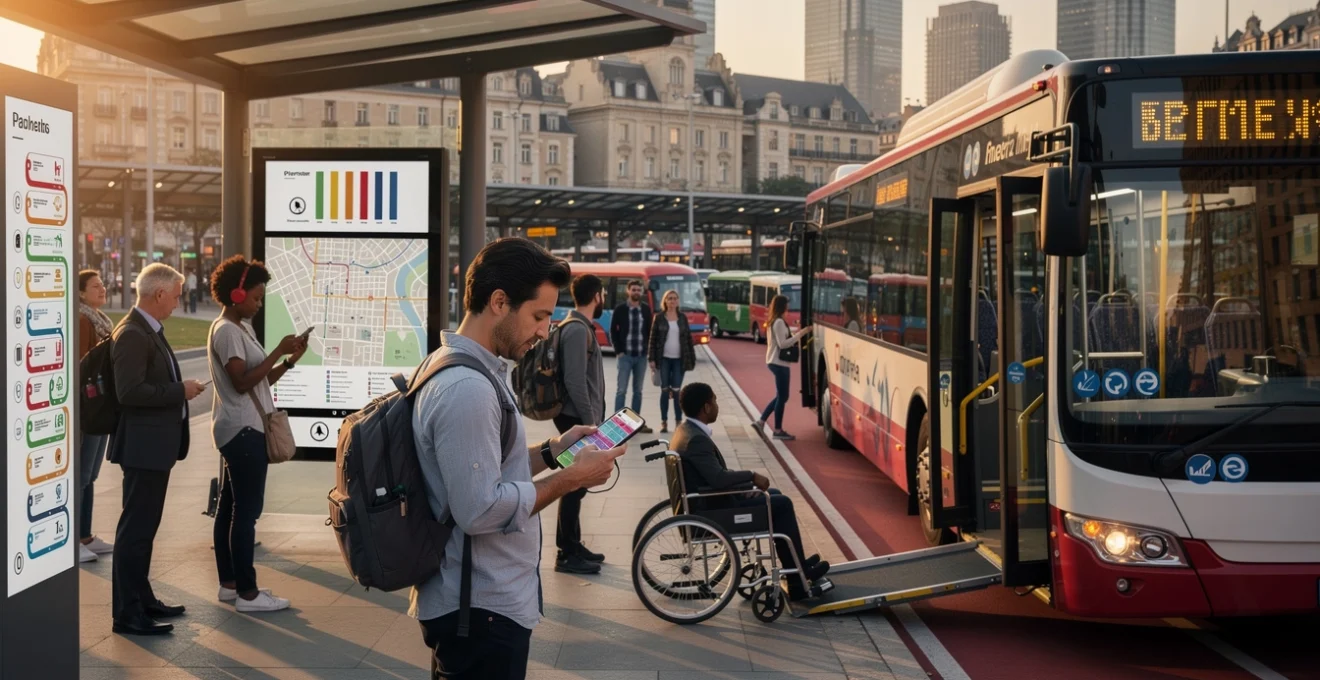
Local buses remain the lifeblood of urban transport networks worldwide, carrying billions of passengers annually across cities from London to Lagos. Yet for many travellers, boarding a bus in an unfamiliar city triggers anxiety that taxis and ride-shares never seem to provoke. The difference between fumbling with coins whilst a queue of impatient commuters glares behind you and smoothly tapping your contactless card before finding a seat lies not in luck, but in preparation and understanding. Buses offer something no private vehicle can replicate: an authentic immersion into daily local life, where students chat about coursework, workers discuss the morning headlines, and elderly residents exchange neighbourhood gossip. Beyond this cultural richness, bus travel delivers practical advantages including substantial cost savings, reduced environmental impact, and access to routes that underground systems simply cannot reach. The transformation from hesitant tourist to confident bus user requires mastering several interconnected skills, from decoding timetables to understanding unspoken etiquette that varies dramatically between Tokyo’s silent coaches and the lively conversation aboard Manila jeepneys.
Mastering route planning with digital transit apps and paper timetables
Effective bus travel begins long before you arrive at a stop. Route planning transforms what might otherwise become a stressful ordeal into a smooth journey. Modern technology has revolutionised this process, yet traditional paper resources still hold value in certain contexts. The most successful travellers develop competence across both digital and analogue planning methods, recognising that mobile batteries deplete, internet connections fail, and sometimes a printed map simply provides superior spatial comprehension.
Decoding google maps transit layer for Real-Time bus tracking
Google Maps has become the default planning tool for millions of travellers, yet many users barely scratch the surface of its transit capabilities. When you activate the transit layer, you access real-time vehicle positions, delay notifications, and alternative route suggestions that update dynamically as conditions change. The platform’s strength lies in its integration of multiple transport modes, seamlessly suggesting combinations of bus, metro, and walking segments to optimise your journey. To extract maximum value, familiarise yourself with the departure time customisation feature, which allows you to plan journeys starting at specific future times rather than defaulting to immediate departure. This proves invaluable when coordinating connections or ensuring you arrive before a venue closes. The step-by-step navigation mode provides turn-by-turn guidance, buzzing your phone when you approach your stop, a feature that eliminates the constant anxiety of missing your destination in an unfamiliar area.
Navigating moovit and citymapper for Multi-Modal journey planning
Whilst Google Maps excels at breadth, specialist transit apps like Moovit and Citymapper often provide superior depth in their covered cities. Moovit crowdsources information from actual users, incorporating details about shelter conditions, stop accessibility, and even which carriage to board for the quickest exit at your destination station. Citymapper, available in major metropolitan areas, has earned devoted followers through its witty interface and genuinely useful features like the “Get Me Home” button, which calculates your route to a saved address with a single tap. Both applications function partially offline once you’ve downloaded city data, making them more reliable than purely online solutions. The crowd-sourced nature of these platforms means you benefit from collective local knowledge, learning which bus bays at complex interchanges correspond to which routes, or which services frequently run ahead of schedule.
Reading physical bus schedules and route maps at interchanges
Despite digital dominance, printed timetables and route maps remain essential skills for the accomplished bus traveller. Many smaller towns and rural areas lack comprehensive digital coverage, whilst even in major cities, physically posted information often includes local details that apps overlook. Bus route maps typically use colour coding to distinguish different services, with numbered stops corresponding to timing points in the timetable. Understanding the difference between timing points, where buses must adhere to scheduled times, and intermediate stops, where timing is approximate, helps you judge whether you can afford a brief errand before your departure. Route variation symbols require particular attention: a small notation might indicate that evening services follow a different path, or that certain stops operate only during school terms. These nuances rarely transfer perfectly to digital platforms, making physical literacy valuable. When examining interchange information displays, note the hierarchical structure: primary information announces the next departures, secondary panels detail full timetables, and tert
iary displays show stop-specific information, including first and last bus times, accessibility icons, and any temporary diversions due to roadworks or events.
Whenever you encounter an unfamiliar interchange, take a minute to orient yourself using the large network map rather than rushing straight to the first bay you see. Think of this as reading the table of contents before diving into a book: it provides context that prevents later confusion. Cross-reference route numbers on the map with the departure boards so you understand both where the bus is going and how frequently it runs. If something seems unclear, do not hesitate to photograph the timetable and map; having a snapshot on your phone can be invaluable if you need to double-check your route mid-journey or when planning your return trip.
Understanding peak vs off-peak service frequencies and route variations
Peak and off-peak patterns can radically change how easy it is to use local buses like an experienced traveller. During rush hours, frequencies may increase to every few minutes on busy corridors, while late evenings and weekends often see reduced service or early last buses. Many networks publish separate columns on timetables for different days of the week and time bands; learning to read these columns prevents unpleasant surprises such as finding yourself stranded after the final departure. In some cities, additional short-turn buses operate only at peak times, running on part of the route before turning back toward the city centre.
Route variations add another layer of complexity. A bus labelled 23A might follow the same path as the 23 for most of its journey before diverting into a housing estate or industrial zone, while school-day-only journeys can skip or add stops near education campuses. Pay close attention to footnotes showing symbols like † or *, which indicate restrictions such as “Fridays only” or “does not operate in August.” When planning bus travel in a new city, it is wise to check both the timetable and the operator’s website for any seasonal changes, special event routes, or construction-related diversions that might affect your chosen service.
Payment systems and fare structures across different bus networks
Once you know which bus to take, the next step is understanding how to pay correctly and efficiently. Around the world, fare systems range from ultra-modern contactless payments to cash-only boxes that accept nothing larger than a small bill. Misjudging the local system can lead to delays, overpaying, or even being refused boarding. To travel like a seasoned rider, you need a working knowledge of contactless payment options, smartcards, passes, and traditional cash fares, along with the rules that govern transfers and zones.
Contactless EMV card payments and mobile wallet integration
In many major cities, you can now tap your bank card or phone directly on the validator when boarding, thanks to EMV contactless technology. This system, popular in London, New York, and Sydney, treats each tap like a transit ticket purchase, often with automatic daily or weekly fare capping. For travellers, this eliminates the need to queue at ticket machines or work out complicated fare tables; you simply “tap in” (and sometimes “tap out”) and let the back-end system calculate the best price. Have you ever worried about buying the wrong ticket and being fined? Contactless systems significantly reduce that risk by automating the pricing process.
Mobile wallet integration via Apple Pay, Google Wallet, or similar platforms adds further convenience. Your phone or smartwatch becomes your ticket, provided it has sufficient battery and is linked to a contactless-enabled card. However, it is crucial to use the same device for each tap, as mixing a plastic card and a phone on the same day can confuse the system and prevent proper fare capping. Before relying on contactless for bus travel in a new country, confirm whether foreign-issued cards are accepted and whether any international transaction fees might apply, as these can add hidden costs to frequent rides.
Oyster card vs travelcard: choosing london’s optimal fare strategy
London offers an excellent case study in how local fare systems reward informed decisions. For most visitors, the choice comes down to pay-as-you-go travel using an Oyster card or contactless bank card, versus purchasing a fixed-duration Travelcard. Pay-as-you-go suits travellers with flexible plans and moderate daily usage, as the system automatically caps fares at a daily or weekly limit across buses, Tube, and some rail services. This allows you to simply tap in and out without worrying about pre-calculating the exact number of journeys.
Travelcards, available for specific zones and durations such as seven days or one month, can be more economical if you expect intensive travel within central zones. The analogy here is choosing between a buffet and à la carte dining: if you know you will “eat” (or ride) a lot, the flat price may save money, but light users may overpay. Remember that London buses are now cashless and operate on a flat fare regardless of distance, making them particularly budget-friendly when combined with fare capping. When planning a multi-day stay, estimate your likely number of trips per day, consider which zones you will visit most, and use Transport for London’s online calculators to compare Oyster, contactless, and Travelcard costs.
Day passes, zone-based pricing, and transfer time windows
Beyond London, many cities organise bus fares by zones or distance bands, sometimes combined into day passes or multi-day tickets. Zone-based pricing divides a region into concentric or sectoral areas, with fares rising as you cross more boundaries; this is common in European and Asian metropolitan regions. A day pass typically allows unlimited travel within designated zones for a calendar day or rolling 24-hour period, ideal if you plan to hop on and off buses while sightseeing. For experienced travellers, understanding the geometry of these zones can help you plan routes that minimise unnecessary crossings and keep costs down.
Transfer rules and time windows are another critical piece of the puzzle. Some networks allow free transfers between buses, or between buses and trams, within a set period—often 60 to 90 minutes—provided you use the same card or ticket. This can make multi-leg journeys vastly cheaper than paying a fresh fare each time you board. In North American cities like Toronto or San Francisco, time-based transfers encourage riders to chain errands into one continuous trip rather than paying separately. Check whether your ticket must be validated only once or at every transfer, and keep digital or printed proof of validity handy in case of inspections, particularly on systems that use random fare checks instead of front-door payment.
Cash handling etiquette and exact change requirements
Despite the spread of contactless and smartcards, cash remains the norm on many regional and developing-world bus systems. In these environments, exact change is often required, and drivers may refuse large bills or be unable to provide change, especially early in the day. It is wise to carry a small wallet of local currency in coins and low-denomination notes when relying on buses, rather than digging through a main wallet in full view of other passengers. This not only speeds up boarding but also reduces the risk of drawing unwanted attention to higher-value cash.
Etiquette around cash payment varies by culture. In some European cities, you purchase a paper ticket from a kiosk and validate it on board, while in parts of Latin America you hand coins to a conductor separate from the driver. Crowded minibuses in Africa or Southeast Asia may rely on a fare collector who moves through the vehicle calling out prices and destinations. Wherever you are, have your fare ready before the bus arrives, avoid arguing about small discrepancies in front of a queue, and step aside after paying so that other riders can board. These small behaviours mark you as a considerate, experienced bus user rather than a confused visitor.
Strategic boarding techniques and stop identification methods
Knowing how to identify the correct stop and board smoothly can make the difference between a relaxed journey and a frustrating one. Local buses rarely wait long at stops, especially in busy urban corridors, so preparation is key. By understanding how different systems signal that a bus should stop, how stops are labelled, and how passengers are expected to queue, you can position yourself correctly and avoid last-minute scrambles. These skills also help when transferring between services at complex intersections or terminals.
Flag stop protocols vs request stop signalling systems
Not all bus stops are created equal. In many North American and rural networks, flag stops operate on a “stop on request” basis: buses only pull over if a passenger is visibly waiting at the roadside or clearly signals the driver. In such places, standing back from the curb while looking at your phone can result in the driver assuming you are not interested, and continuing past. To avoid this, stand close to the marked stop sign, face the oncoming bus, and make a small but visible hand signal as it approaches. Think of it as hailing a taxi, but with more structure and signage.
In contrast, urban systems with closely spaced stops often use clearly designated request stops where buses are expected to halt only if someone has pressed the stop button on board or is waiting at the shelter. On these routes, it is your responsibility to signal your intention to disembark by pressing the bell or stop button in good time, usually shortly after the previous stop. Failing to do so may mean the bus sails past your intended destination, particularly on limited-stop or express routes. When you first board, be aware of whether the system automatically stops at every stop or only on request; this simple distinction dramatically affects how actively you must signal both boarding and alighting.
Recognising bus stop codes and shelter information displays
Modern bus networks increasingly use unique stop codes to identify each boarding point, often printed on the pole, shelter, or timetable frame. These short alphanumeric codes—such as “Stop D2” or “Stop 14567”—can be entered into apps or SMS services to retrieve real-time departure information. Learning to spot and use these codes is like having a precise GPS coordinate for your bus journey, especially in areas where multiple routes share a single intersection. When comparing your app’s instructions with the physical environment, always confirm that the stop code matches to ensure you are waiting in the right place.
Shelter information displays typically show route numbers, destinations, and sometimes a schematic map of which buses use which bays. In high-frequency corridors, electronic countdown screens may list the next departures and indicate whether a bus is on time. Use these displays to double-check that the bus number and direction match your planned route, rather than relying solely on colour or logo recognition, which can be misleading in multi-operator cities. If your stop serves buses in both directions, pay close attention to the destination and arrows on the sign; boarding in the wrong direction is one of the most common mistakes inexperienced riders make.
Queue formation customs in UK, singapore, and japanese transit systems
Queuing etiquette at bus stops provides a clear window into cultural norms. In the UK, orderly lines form almost instinctively, with passengers arriving later joining the back and boarding in sequence. Cutting the queue is considered poor behaviour and may draw disapproving looks or comments. To blend in, simply note where the line naturally starts—often aligned with where the bus doors usually stop—and take your place without pushing forward.
In Singapore and many Japanese cities, queuing is even more formalised, with painted lines or markers on the pavement indicating where to stand for each boarding door. At major interchanges, passengers may form multiple parallel queues for different routes serving the same bay. Here, discipline is high: allow alighting passengers to exit fully before stepping forward, and avoid standing in the path of other queues. The underlying principle in these systems is that predictability and order keep boarding safe and efficient. By following local queuing customs, you not only show respect but also benefit from a smoother, faster boarding experience.
Onboard navigation and communication with bus operators
Once you are on the bus, your focus shifts from boarding successfully to navigating toward your destination with confidence. This stage involves interpreting onboard information systems, signalling your stop at the right time, and communicating effectively with the driver when necessary. Handling these tasks calmly allows you to relax and observe the city around you, secure in the knowledge that you will not miss your stop or cause disruption.
Reading LED destination displays and electronic next-stop announcements
LED destination displays, placed on the front, side, and sometimes rear of buses, are your first line of verification that you have boarded the correct vehicle. These displays usually show the route number and primary destination, occasionally with intermediate landmarks. On more advanced systems, the internal screens and audio announcements provide next-stop information, connections, and even disruption alerts. Familiarising yourself with the spelling and pronunciation of your stop in advance can help you recognise it when the announcement comes, especially in countries where place names differ significantly from your native language.
If the system provides a route diagram inside the bus, use it like a progress bar: track each passing stop so you know how many remain before you need to signal. In cities without reliable announcements, you can combine visual cues outside—such as major intersections or distinctive buildings—with a transit app running in the background on your phone. Think of the technology as a backup rather than a crutch; the more you learn to read the physical environment, the more resilient you become if your battery dies or GPS signal drops.
Bell pull timing and stop request button placement
Stop request systems vary from traditional bell cords running along the ceiling to modern illuminated buttons on poles and seatbacks. Whichever design you encounter, the key is timing. Press the button or pull the cord shortly after your bus passes the stop before your destination, not at the last second. This gives the driver ample time to check mirrors, change lanes if required, and brake smoothly. Waiting too long can force a hard stop or cause the driver to miss the stop entirely, especially on fast or crowded routes.
On some systems, a “Stop Requested” light or sound confirms that your signal has been received, so there is no need to press repeatedly. Overuse of the bell can irritate both drivers and fellow passengers. If multiple riders want the same stop, a single press is sufficient. When travelling on limited-stop or express services, be aware that not all stops are eligible for request; consult the route map to ensure your intended stop is served and, if in doubt, ask the driver when you board whether they can drop you there.
Driver interaction protocols for route queries and transfer information
Bus operators are often the most knowledgeable people you will meet about local routes and transfer options, but they are also managing a heavy workload and tight schedules. The best time to ask for guidance is while boarding, before you tap or pay, or at a quiet layover point—not while the bus is moving through heavy traffic. Keep your question brief and specific, such as “Does this bus stop near Central Market?” or “Which stop is best to transfer to route 10?” You will usually receive a clear answer, and drivers in many cities are happy to call out your stop if you let them know in advance.
In some countries, regulations limit how much conversation drivers can have while the bus is in motion, for safety reasons. Respect these rules by avoiding extended chats and by moving away from the cab once your question is answered so others can board. When language is a barrier, showing the driver the name or address of your destination written down, or on your phone, can be far more effective than attempting complex verbal explanations. A simple smile and “thank you” go a long way toward maintaining goodwill, especially if you need to ask a follow-up question later in the journey.
Managing luggage storage and priority seating regulations
Experienced travellers know that how you manage luggage on a bus can affect not only your comfort but also that of everyone around you. Large backpacks should be removed from your shoulders and either placed on your lap or tucked between your legs near your feet, rather than worn on your back where they can inadvertently hit other passengers. Suitcases and bulky items are best stored in designated luggage racks if available, or positioned in low-traffic areas away from doors and aisles. Treat the bus like a shared living room: you are a guest, not the sole occupant.
Priority seating for older adults, pregnant passengers, people with disabilities, and those with young children is a common feature worldwide, sometimes backed by legal requirements. Even if these seats are not currently occupied, you should be prepared to offer them the moment someone who might need them boards. In many cultures, failing to give up a priority seat is seen as a serious breach of manners. When in doubt, a simple “Would you like to sit here?” accompanied by a gesture speaks volumes. Respecting these norms not only supports vulnerable riders but also signals that you understand and embrace local bus etiquette.
Advanced tactics for bus rapid transit and express services
As cities seek to move more people efficiently, many have turned to Bus Rapid Transit (BRT) and express buses that blur the line between traditional bus services and rail systems. These routes often operate in dedicated lanes, use off-board fare collection, and have fewer stops, enabling faster journeys across longer distances. To use these systems like an expert, you must understand their unique boarding procedures, service patterns, and integration with park-and-ride facilities.
Navigating TransMilenio-style dedicated busways and pre-boarding fare gates
Systems modelled on Bogotá’s TransMilenio or Istanbul’s Metrobus use dedicated busways and enclosed stations with fare gates, more akin to metro lines than conventional bus stops. Here, you typically pay or tap your card before entering the platform area, allowing all doors of the bus to open simultaneously for swift boarding and alighting. Failing to understand this flow can leave you stranded outside while your bus pulls away. To avoid confusion, watch how locals enter, tap, and position themselves along the platform according to where different routes stop.
Within these stations, multiple routes may share the same platform but diverge after a few stops. LED screens above each bay usually list arriving routes, destinations, and stopping patterns. Treat these like airport departure boards: double-check the route number and final destination before boarding, and confirm that your stop lies on that service’s path. Because BRT corridors can be extremely busy at peak times, stand clear of the platform edge, allow alighting passengers to exit first, and move quickly inside the vehicle to make room for others. With practice, the system becomes as intuitive as a subway: you will change lines, ride express segments, and connect at major hubs with ease.
Understanding limited-stop vs all-stops service designations
Express and limited-stop buses provide faster journeys by skipping certain stops, but only if you know how to interpret their designations. Labels such as “Limited,” “Express,” “Rapid,” or route numbers with an “X” or “E” suffix generally indicate that the bus will stop only at key intersections or transfer points. This is similar to taking a fast train that skips smaller stations: you arrive sooner, but you need to ensure your station is one of those served. Timetables and route maps usually highlight express stops using distinctive symbols or bold text.
All-stops services, by contrast, call at every marked stop along the route unless signalled otherwise. When deciding which to take, ask yourself whether speed or proximity matters more; sometimes a short walk from an express stop is a worthwhile trade-off for a significantly shorter ride. In some cities, express and local buses share long stretches of the same corridor before diverging. Read the destination display carefully and, if you are unsure, ask the driver whether the bus stops at your intended stop. Boarding an express by mistake is a common error, but one that becomes rare once you learn to decode these service patterns.
Park-and-ride facilities integration with suburban bus networks
Park-and-ride sites serve as vital gateways between car-dependent suburbs and high-frequency bus or BRT corridors. These facilities allow you to park your vehicle in a secure lot and continue by bus into congested urban centres, avoiding traffic and parking hassles. Many are located near motorway interchanges or suburban rail stations, with dedicated bus lanes or ramps that feed directly into express routes. For commuters and visitors alike, understanding how park-and-ride integrates with local bus networks opens up cost-effective and stress-free options for entering busy city cores.
When you plan to use park-and-ride, check the schedule for both early-morning and late-evening services to ensure that a return bus is available at your planned time. Some facilities offer discounted or bundled fares that include both parking and bus travel, while others require separate payments. Look for signage indicating which bay serves which route, and note any restrictions on overnight parking if you intend to leave your car for an extended period. By combining driving for the outer portion of your trip with fast, frequent buses for the inner segment, you gain the flexibility of a car without sacrificing the efficiency of well-designed public transport.
Cultural adaptation and safety protocols for international bus travel
Using local buses in foreign countries introduces not only new systems but also new cultural expectations and safety considerations. Informal minibuses may operate alongside official routes, night services may follow altered patterns, and accessibility standards can vary widely. To truly travel like an experienced rider, you must adapt to these local realities while maintaining your own security and comfort. That means recognising informal networks, understanding when extra precautions are warranted, and knowing how accessibility features are implemented around the world.
Recognising informal matatu and jeepney route systems in developing nations
In many developing nations, informal or semi-formal minibuses such as Kenya’s matatus, the Philippines’ jeepneys, or Mexico’s colectivos form the backbone of everyday mobility. These vehicles often lack formal timetables or digital presence, relying instead on shouted destinations, painted signage, and the collective knowledge of local residents. At first glance, the system can seem chaotic, but underneath lies a set of stable routes and customs. Observing where people wait, how they signal vehicles to stop, and which destinations are called out will help you decode this organic network.
When using such services, prioritise safety and clarity. Confirm the fare before boarding or immediately after, and keep small notes ready to avoid disputes over change. Sit where you feel comfortable, ideally near the door if you expect to alight soon, and keep valuables out of sight. Asking a trusted local—hotel staff, a guide, or a shopkeeper—for advice on reliable routes and operators can dramatically improve your experience. While informal buses may lack the polish of formal systems, they often offer unparalleled insight into local life, provided you approach them with awareness and respect.
Night bus services: enhanced security measures and route modifications
Night buses extend the reach of public transport after metro and regular bus services have finished, but they operate under different conditions that you should understand before relying on them. Routes may be altered to serve nightlife districts, hospitals, or major interchange points, while skipping quieter residential streets. Frequencies are typically much lower, ranging from every 15 minutes in major capitals to hourly or worse in smaller cities. As a result, missing a night bus can mean a long wait, sometimes in sparsely populated areas.
From a safety perspective, night travel calls for a few extra precautions. Choose well-lit stops near open businesses where possible, and position yourself where you can see approaching buses while still remaining visible to others. Sit closer to the front of the bus if you are travelling alone, as this tends to be better monitored by both driver and CCTV. Avoid displaying expensive items and keep headphones at a moderate volume so you remain aware of your surroundings. Many cities publish specific night bus maps and timetables; reviewing these in advance reduces uncertainty and helps you avoid walking long distances through unfamiliar areas after dark.
Wheelchair accessibility features and kneeling bus technology
Accessibility on buses has improved significantly over the last two decades, with many fleets now featuring low-floor designs, kneeling mechanisms, and deployable ramps. A kneeling bus can lower its entrance side toward the curb, reducing the step height for passengers with limited mobility, parents with strollers, or those carrying heavy bags. Wheelchair users typically board via a dedicated ramp—manual or automatic—located at the front or middle door, and secure themselves in a designated space using safety belts or clamps. Learning how these systems work in your destination city enables you to plan trips that accommodate mobility needs without stress.
Regulations and practices differ by region. In the EU and much of North America, drivers are trained to assist with deploying ramps and may be required to prioritise wheelchair spaces over strollers or luggage. In some developing regions, accessible buses may be less common, and boarding can require additional assistance from companions or bystanders. If you or someone in your group relies on mobility aids, check the transit authority’s accessibility guides, which often list fully accessible routes, stop infrastructure (such as raised kerbs), and paratransit alternatives. By understanding wheelchair accessibility features and kneeling bus technology in advance, you ensure that public buses remain a viable and dignified travel option for everyone in your party.