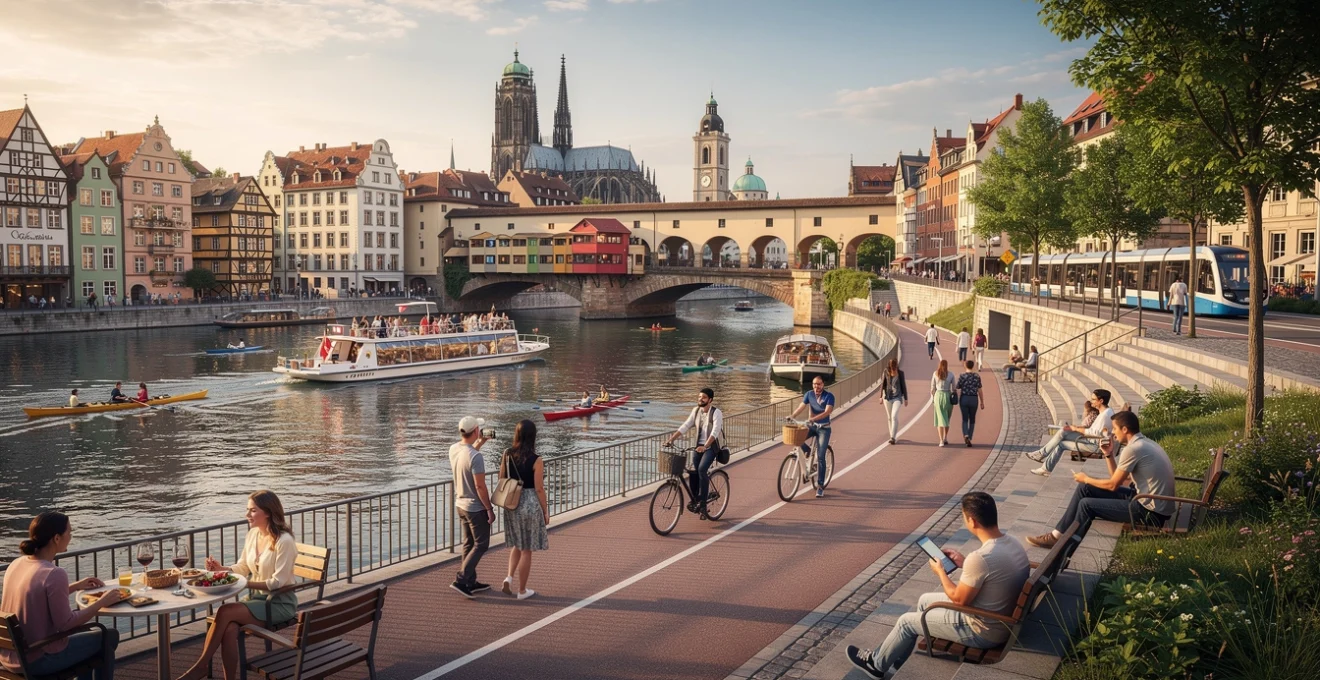
Europe’s most captivating urban destinations often share a common thread: they have grown alongside magnificent rivers that continue to define their character today. These waterways have shaped centuries of cultural development, architectural innovation, and social life, creating cities where exploration feels naturally unhurried and deeply rewarding. From the baroque grandeur of Budapest’s Danube embankments to the intimate medieval quarters of Bruges’ canal network, riverfront cities offer an ideal blend of cultural richness and contemplative discovery.
The relationship between water and urban life in Europe creates unique environments where slow tourism flourishes naturally. Rivers provide natural corridors for walking, cycling, and gentle boat journeys, while their banks host some of the continent’s most significant cultural institutions, historic districts, and innovative urban planning projects. This symbiotic relationship between waterways and culture makes riverfront cities particularly suited to travellers seeking meaningful engagement with local heritage, arts, and daily life.
Historic river cities along europe’s major waterways
Europe’s historic river cities represent some of the continent’s most sophisticated examples of urban development shaped by waterways. These destinations have evolved over centuries to create harmonious relationships between their rivers and cultural landscapes, resulting in cities where exploration feels both effortless and deeply enriching.
Prague’s vltava river cultural quarter and bohemian architecture
Prague’s relationship with the Vltava River creates one of Europe’s most photogenic and culturally rich urban landscapes. The riverbanks host an extraordinary concentration of architectural styles spanning Gothic, Renaissance, Baroque, and Art Nouveau periods, creating a visual narrative of Central European cultural evolution. The famous Charles Bridge serves as both a pedestrian thoroughfare and an open-air gallery, where baroque statuary mingles with contemporary street performers and artisan stalls.
The Vltava’s cultural quarter extends along both banks, encompassing the National Theatre district, the historic Jewish Quarter, and the magnificent Prague Castle complex. Cultural institutions cluster naturally around the water, including the Rudolfinum concert hall, the Museum of Decorative Arts, and numerous galleries that occupy converted baroque palaces. The river’s gentle curves create intimate viewing points and peaceful terraces where visitors can pause to absorb the architectural splendour.
Walking routes along the Vltava reveal Prague’s layered history through carefully preserved medieval streets that lead to riverside promenades. The city’s commitment to pedestrian access means that cultural exploration flows seamlessly from historic squares to waterfront districts, creating natural circuits for discovery that respect both the urban fabric and the river’s role in daily life.
Budapest’s danube embankment UNESCO world heritage sites
Budapest’s Danube embankments represent perhaps Europe’s most spectacular example of riverfront urban planning, earning UNESCO World Heritage status for their architectural and cultural significance. The river divides the city into Buda and Pest, creating distinct characters on each bank while maintaining visual unity through elegant bridge designs and coordinated embankment development.
The Pest side showcases the grandeur of 19th-century urban planning with the magnificent Parliament Building, the Hungarian Academy of Sciences, and the Gresham Palace forming a continuous cultural corridor. These institutions create a natural progression for cultural exploration, connected by the elegant Danube promenade that provides both practical pedestrian infrastructure and contemplative spaces for appreciating the architectural ensemble.
Buda’s elevated position offers panoramic perspectives over the cultural landscape, with the Royal Palace complex, Fisherman’s Bastion, and Matthias Church creating dramatic silhouettes against the sky. The cable car connection between the riverfront and hilltop districts demonstrates how thoughtful infrastructure can enhance cultural accessibility while preserving historic character.
Amsterdam’s canal ring museum district and golden age heritage
Amsterdam’s canal ring system creates a unique urban environment where waterways serve as both transportation corridors and cultural venues. The concentric canal design channels visitors naturally through the city’s museum district, where world-class institutions occupy historic canal houses and purpose-built cultural facilities along the water.
The museum quarter demonstrates how historic canal infrastructure can support contemporary cultural programming. The Rijksmuseum, Van Gogh Museum, and Stedelijk Museum cluster around the Museumplein, while canal boat routes provide gentle approaches to these institutions that allow visitors to appreciate both the urban planning and architectural
views. Historic merchant houses, former warehouses, and stone bridges read like a living textbook of the Dutch Golden Age, yet the overall experience remains pleasantly low-key and walkable.
What makes Amsterdam especially appealing for relaxed cultural exploration is the way its slow canal traffic and compact layout encourage unhurried movement between sights. You might glide past gabled façades by boat in the morning, pause at a waterside café for lunch, then stroll or cycle along the Herengracht to independent galleries in the afternoon. Traffic-calmed streets and extensive cycling infrastructure mean that even first-time visitors feel comfortable exploring at their own pace, using the water as a constant point of orientation.
Florence’s arno river renaissance art galleries and ponte vecchio
Florence’s Arno River provides a serene counterpoint to the intensity of its Renaissance masterpieces. The riverbanks frame some of the city’s most important cultural institutions, including the Uffizi Galleries and the Palazzo Pitti, which face one another across the water and are linked by the historic Vasari Corridor. This elevated passage, created in the 16th century, is a tangible reminder of how closely Florentine political and cultural power were once tied to control of the river crossings.
For modern travellers, the Arno functions as a natural axis for cultural wandering. On the north bank, narrow medieval streets lead down to viewpoints where Brunelleschi’s dome and the campanile rise above ochre rooftops. Crossing the Ponte Vecchio, with its goldsmiths’ workshops still clinging to the bridge like barnacles, you emerge into the quieter Oltrarno district, where artisan studios, small galleries, and local enotecas line cobbled lanes. Early morning or late evening walks along the Lungarni offer softer light, fewer crowds, and reflective moments as the city’s façades shimmer on the river surface.
Because Florence is compact, you can easily structure a day around the river: an Arno-side coffee near the Uffizi, a gallery visit, a stroll across the Ponte Vecchio, and an afternoon exploring Boboli Gardens above the south bank. This simple loop illustrates how the river helps tame what might otherwise feel like an overwhelming concentration of art and history, turning Florence into a very walkable, very human-scale riverfront city.
Waterfront promenades and pedestrian-friendly urban planning
Many of Europe’s most liveable riverfront cities have transformed once-industrial banks into pedestrian promenades. These projects go far beyond beautification: they re-balance cities in favour of walkers and cyclists, open up access to the water, and create cultural corridors where museums, theatres, and neighbourhood squares connect seamlessly. For travellers seeking culture and relaxed exploration, these redeveloped waterfronts function like ready-made itineraries.
Lyon’s rhône and saône confluence redevelopment project
Lyon offers one of Europe’s most ambitious examples of riverfront urban regeneration at the Confluence of the Rhône and Saône. Once dominated by warehouses, rail yards, and logistics depots, this peninsula has been reimagined as a mixed-use eco-district where striking contemporary architecture coexists with generous public space. The star attraction for many visitors is the Musée des Confluences, a dramatic glass-and-steel structure perched at the tip of the peninsula, where the two rivers meet.
For slow travellers, the real luxury lies in how easy it is to move through this district on foot or by bike. Broad promenades lined with trees and benches trace both riverbanks, linking the historic Presqu’île to new residential quarters, cultural venues, and floating restaurants. Car traffic has been deliberately pushed back, allowing pedestrians and cyclists to dominate the water’s edge. You can spend a whole afternoon simply following the riverside path, stopping at design shops, galleries, and cafés as you go, without once needing to consult a public-transport map.
Lyon’s approach illustrates a broader trend in European riverfront planning: treating the waterfront as a continuous public living room rather than fragmented development plots. For visitors, this means that “just going for a walk by the river” often becomes an immersive cultural experience, passing street art, markets, and performance spaces along the way.
Bordeaux’s garonne river tramway integration and public spaces
Bordeaux has undergone a remarkable transformation along the Garonne River, turning what was once a traffic-choked quayside into one of France’s most elegant waterfront promenades. A key factor in this success is the integration of the city’s modern tramway with its 18th-century riverfront architecture. Sleek trams now glide almost silently past honey-coloured façades and across the grand Place de la Bourse, making it easy for visitors to move between the historic centre, riverfront, and outlying districts without relying on cars.
The left bank promenade stretches for kilometres, with wide pedestrian zones, cycle lanes, and generous plantings that soften the stone quays. One of the most beloved features is the Miroir d’Eau, a shallow reflecting pool that alternates between mist and mirror, drawing families, photographers, and flâneurs throughout the day. Further along, converted warehouses now house cultural venues, design shops, and wine bars, creating a linear cultural district that is effortless to explore on foot.
For travellers, the combination of tram connectivity and walkable waterfront means you can easily structure a car-free stay. You might take the tram to the Cité du Vin, explore its innovative wine exhibitions, then amble back along the Garonne as the sun sets behind the Pont de Pierre. In a city that lives and breathes wine culture, the riverfront becomes a stage where everyday life, heritage, and gastronomy intersect.
Cologne’s rhine boulevard car-free zone implementation
Cologne has long turned its face towards the Rhine, but recent decades have seen a deliberate push to make more of the central riverbank car-free and people-focused. The Rhine Boulevard on the Deutz side of the river is a flagship example: a vast, stepped promenade that tumbles down towards the water, offering some of the best views of Cologne’s twin-spired cathedral and Old Town skyline. By restricting vehicle access and prioritising pedestrians, the city has created a new civic terrace that feels both monumental and relaxed.
The steps of the Rhine Boulevard function like an open-air auditorium where daily life plays out. Office workers bring their lunches, couples linger at sunset, and visitors photograph passing barges and river cruise ships. Above the steps, a wide cycling route and walking path connect bridges, parks, and neighbourhoods, making it easy to combine sightseeing with gentle exercise. The absence of through-traffic reduces noise and pollution, reinforcing the sense that the river belongs to people first and vehicles second.
From the traveller’s perspective, this car-free Rhine front simplifies orientation. You can cross from the cathedral side to Deutz by bridge, descend to the promenade, and follow the river for as long as your energy allows, knowing there will be frequent seating, cafés at bridgeheads, and connections back into the city centre. It’s a practical demonstration of how urban design choices directly support slow, culturally focused tourism.
Seville’s guadalquivir river cycling infrastructure and green corridors
Seville has emerged as one of Europe’s most cycle-friendly cities, and the Guadalquivir River lies at the heart of its two-wheeled revolution. Over the past 15 years, the city has developed more than 180 kilometres of segregated bike lanes, many of which trace the riverfront or link riverside districts with historic neighbourhoods. The result is a network where even visitors with modest cycling experience feel confident renting a bike and exploring at their own pace.
Along the Guadalquivir, green corridors combine planted embankments, parks, and sports facilities with smooth cycling paths and broad pavements. You can pedal from the Triana district—known for flamenco heritage and ceramics—downstream past rowing clubs, open-air terraces, and the Torre del Oro, all the way to more tranquil stretches where locals jog, picnic, and practice yoga by the water. Because the route is largely flat and well-signposted, it naturally lends itself to leisurely exploration rather than speed.
For culture-focused travellers, this infrastructure opens up new ways of experiencing Seville. Instead of hopping between isolated monuments, you can string together an itinerary that follows the river as a narrative thread: from former port installations recalling Spain’s Age of Discovery, to contemporary cultural centres and riverside bars where modern Sevillanos spend their evenings. In this sense, the cycling network is not just transportation—it’s an interpretive tool, revealing how the city continues to evolve along its historic waterway.
River-based cultural tourism infrastructure and attractions
Across Europe, riverfront cities are investing in cultural infrastructure that explicitly celebrates their relationship with water. This can take the form of dedicated river museums, repurposed industrial docks turned into art districts, or carefully curated boat routes that highlight both natural and built heritage. For travellers, these initiatives provide structured yet relaxed ways to understand how rivers have influenced trade, migration, cuisine, and urban form over centuries.
Many river cities now treat their waterways as open-air galleries or storylines. Themed cruises might focus on architecture, literature, or music, while riverside interpretation panels explain former harbour functions or flood-management engineering in accessible language. Increasingly, you’ll find mixed-use cultural hubs in former warehouses, combining exhibition spaces, performance venues, and restaurants under one roof. This layering of functions means you can easily spend half a day in a single riverfront complex without the experience ever feeling rushed.
At the same time, there is growing awareness of the need to balance tourism development with environmental stewardship. Some destinations limit boat traffic in ecologically sensitive stretches, promote electric or solar-powered craft, or design flood-resilient promenades that double as public spaces in dry weather. As a visitor, you benefit from this careful planning: you can enjoy immersive river experiences while knowing that cities are thinking long-term about their waterways’ health and resilience.
Slow tourism movement and mindful river city exploration
The rise of slow tourism has dovetailed naturally with the appeal of riverfront cities. Instead of rushing through checklists of attractions, more travellers are seeking depth over breadth, preferring to spend several days in one place, walk familiar streets more than once, and connect with local rhythms. Rivers, with their steady flow and ever-changing light, provide a kind of visual metronome that encourages us to slow down, observe, and reflect.
In practice, mindful river city exploration might mean choosing a centrally located riverside base, planning one major cultural visit per day, and allowing generous time for unscripted wandering along the banks. You might sit on the same bench each morning and watch how commuters, dog-walkers, and market boats animate the scene, or return to a favourite bridge at different times of day to see how the atmosphere shifts. These small rituals turn a short trip into something that feels more like a temporary way of life than a sprint through sights.
Porto’s douro valley wine tourism and leisurely quinta visits
Porto and the Douro Valley encapsulate the essence of slow, river-based tourism. In the city itself, the Ribeira district cascades down to the Douro in a jumble of tiled façades and narrow alleys, while across the water in Vila Nova de Gaia, centuries-old port wine lodges line the south bank. Many visitors begin their exploration by touring one or two of these lodges, learning how grapes from upriver terraces are transformed into the fortified wines that made Porto famous.
The real magic, however, unfolds as you follow the river upstream into the Douro Valley. Here, the hillsides are carved into steep, UNESCO-listed terraces, with quintas (wine estates) perched above the water. Rather than rushing between them, the most rewarding approach is to choose one or two estates and linger: take a slow tour of the cellars, join a guided walk through the vineyards, and end with a long, unhurried lunch overlooking the river. Many quintas now offer small-scale accommodation, allowing you to wake up to mist rising over the water and hear nothing but birds and the occasional distant train.
Because the Douro railway and river cruises follow the same sinuous route, you can combine different modes of travel without ever losing sight of the water. This creates a gentle, almost meditative rhythm to your days: boat one day, train the next, perhaps a short riverside walk in between. It’s an ideal setting if you’re looking to reconnect with nature, learn about wine culture in depth, and experience a side of Portugal that remains firmly rooted in traditional river life.
Strasbourg’s petite france district walking routes and contemplative spaces
Strasbourg’s Petite France district feels purpose-built for slow exploration, even though its origins lie in medieval industry rather than modern tourism. Once home to tanners and millers who depended on the channels of the River Ill, today it’s a maze of half-timbered houses, flower-decked balconies, and cobbled lanes framed by calm waterways. Several pedestrian-only bridges and traffic-free quays create natural loops for walking, allowing you to drift between viewpoints without worrying about cars.
One of the district’s great pleasures is the abundance of small, contemplative spaces that reveal themselves gradually. A narrow alley might open onto a tiny riverside square with a solitary bench; a flight of steps leads down to a low quay where you can sit at eye-level with the water and watch tour boats glide past. Because Petite France is compact, you can comfortably revisit your favourite corners at different times of day—perhaps catching soft morning light on the façades, then returning in the evening when bistro lights reflect in the canals.
For those interested in architecture and urban history, waymarked walking routes explain how the district evolved from working waterfront to cherished heritage quarter. Many visitors find that combining one of these self-guided loops with ample unscheduled time works best. That way, you get both the satisfaction of learning and the simple joy of wandering until you find “your” bridge, café, or quiet stretch of water to claim for an hour.
Bruges’ canal system boat tours and medieval quarter discovery
Bruges is often described as a fairy-tale city, and its canal system plays a central role in that perception. The narrow waterways, arched stone bridges, and gabled houses reflected in calm water create a sense that time has slowed—sometimes even stopped. Short canal boat tours, typically lasting 30 minutes, offer an excellent introduction to the medieval core, giving you an overview of how warehouses, guildhalls, and churches cluster along the water.
Yet the real appeal for many visitors lies in what comes after the boat ride. Having glimpsed hidden gardens, quiet courtyards, and lesser-known façades from the water, you can then seek them out on foot, threading your way through narrow lanes and over humpbacked bridges. Because the historic centre is compact and largely pedestrianised, there is no rush: you might explore a single quadrant of the old town in a day, punctuating your wandering with long café stops or visits to small museums.
If you’re considering when to visit, shoulder seasons such as early spring and autumn often provide the best balance of atmosphere and breathing space. Early mornings and late evenings are particularly rewarding along the canals, when day-trippers have left and the water mirrors lanterns and church towers. In these quieter moments, Bruges feels less like an open-air museum and more like a living, breathing river city that just happens to have kept its medieval soul remarkably intact.
Bath’s river avon georgian architecture and thermal spring heritage
In Bath, the River Avon winds through a landscape defined by creamy Bath stone and graceful Georgian architecture. While many visitors come primarily for the Roman Baths and modern thermal spa complex, the river offers a gentler, often overlooked dimension to the city’s heritage. From Pulteney Bridge—with its rare combination of shops lining both sides—to the sweeping curve of the nearby weir, the Avon creates one of England’s most photogenic urban river scenes.
Walking paths follow the river in both directions, quickly leading you away from the busiest shopping streets into quieter residential areas and parks. It’s easy to imagine 18th-century visitors taking much the same routes between elegant lodging houses and the Pump Room, combining medical “taking of the waters” with leisurely riverside strolls. Today, you can recreate a modern version of that routine: a morning spa session, followed by a slow walk along the Avon Trail, perhaps ending with tea in a riverside garden.
For a different perspective, small boat operators offer short cruises that reveal how closely the city’s development has always been tied to the river—first for industry and later for recreation. When you consider that Bath’s UNESCO World Heritage status now recognises both its Roman and Georgian layers, it becomes clear that the Avon is more than just a picturesque backdrop. It is a key element in the city’s long story of health, leisure, and architectural ambition.
Riverside dining scene and waterfront gastronomy districts
Food and water have always been closely linked, and Europe’s riverfront cities make the most of that relationship. From casual cafés under plane trees to refined dining rooms with floor-to-ceiling river views, waterfront gastronomy districts invite you to slow down and savour both local flavours and urban scenery. For many travellers, a memorable riverside meal becomes the emotional anchor of a trip—an experience that captures a city’s character more vividly than any single monument.
Riverfront dining often reflects a region’s history and trade patterns. In port cities such as Porto or Bordeaux, wine bars cluster along former quays where barrels once arrived by boat. In Central European capitals, you’ll find seasonal beer gardens or strandbars popping up on sandy river islands and embankments, turning the water’s edge into an open-air living room during warm months. Even in cooler northern cities like Amsterdam or Stockholm, well-placed terraces and heated patios allow you to linger comfortably beside canals and harbours for much of the year.
As you plan your own river city itinerary, it can be helpful to think of meals not just as refuelling stops but as mini cultural experiences in their own right. Do you want to try a traditional dish—perhaps goulash in Budapest, quenelles in Lyon, or fresh seafood along Lisbon’s Tagus—while watching boats pass? Or would you prefer contemporary tasting menus that reinterpret local ingredients in cutting-edge dining rooms overlooking the water? In many destinations, you can have both, sometimes within a few hundred metres of each other along the same riverbank.
Practically speaking, booking at least one riverside restaurant in advance, especially for sunset, can transform an ordinary evening into a highlight of your journey. At other times, simply following the river promenade and seeing which terrace feels welcoming is part of the pleasure. Either way, you’re participating in a long European tradition: gathering by the water to eat, talk, and watch the world flow by—literally and figuratively.