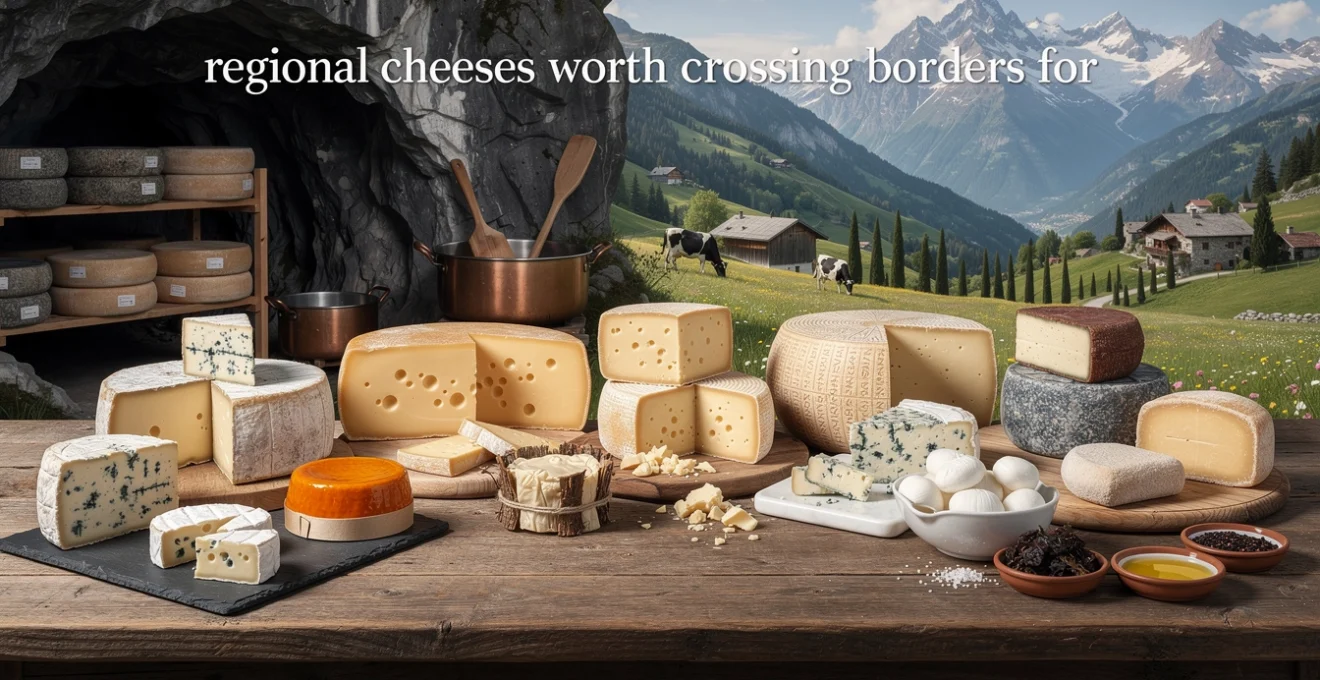
Europe’s cheese landscape represents one of humanity’s most sophisticated culinary achievements, where centuries of tradition meet exacting modern standards. From the limestone caves of Roquefort to the alpine pastures of Switzerland, each region has developed distinctive cheesemaking techniques that reflect their unique terroir and cultural heritage. The protected designation systems across European countries ensure that these artisanal treasures maintain their authenticity and quality, making them genuine destinations for food enthusiasts willing to travel thousands of miles for a single, perfect bite.
The concept of cheese tourism has evolved dramatically over the past decade, with dedicated gastronomy routes now attracting millions of visitors annually. These regional specialities offer far more than simple sustenance; they provide windows into local history, agricultural practices, and the passionate dedication of artisan producers who have preserved ancient techniques through generations of family knowledge.
French artisanal cheese terroirs and protected designation origins
France’s Appellation d’Origine Contrôlée (AOC) system stands as the gold standard for cheese protection worldwide, safeguarding over 400 distinct varieties through rigorous geographical and production criteria. This comprehensive framework ensures that every aspect of cheesemaking, from the breed of cattle to the specific caves used for aging, remains authentic to centuries-old traditions. The French approach to cheese protection goes beyond simple naming rights, encompassing the entire ecosystem that contributes to each cheese’s unique character.
The diversity of French cheese regions creates an almost overwhelming array of choices for serious cheese enthusiasts. Each terroir contributes distinct characteristics: the maritime climate of Normandy produces exceptionally creamy cheeses, while the volcanic soils of Auvergne create mineral-rich varieties with complex flavour profiles. Understanding these regional influences becomes essential for appreciating why certain French cheeses simply cannot be replicated elsewhere, regardless of technical expertise or modern equipment.
Roquefort AOC Cave-Ageing techniques in aveyron limestone caverns
The natural caves of Roquefort-sur-Soulzon represent one of nature’s most perfect cheese-ageing environments, where constant temperatures between 8-12°C and humidity levels of 95% create ideal conditions for Penicillium roqueforti development. These limestone caverns, formed millions of years ago, feature natural fissures called fleurines that provide precise air circulation patterns essential for proper blue vein formation. The entire process requires exactly 100 days of cave ageing, during which master affineurs turn each wheel multiple times to ensure even moisture distribution.
What makes Roquefort truly exceptional lies in the symbiotic relationship between the specific caves and the indigenous moulds that have colonised these spaces over centuries. Modern attempts to recreate these conditions artificially have consistently failed to produce the same depth of flavour and distinctive blue-green marbling that characterises authentic Roquefort. The caves maintain their own microclimate, with natural air currents that cannot be mechanically replicated, making each wheel a product of its precise geographical location.
Comté Franche-Comté alpine pasture seasonal variations
Comté production showcases the profound impact of seasonal variations on cheese character, with wheels aged for a minimum of 12 months revealing distinct flavour profiles depending on when the milk was collected. Summer Comté, produced from milk of cows grazing on high alpine meadows rich with wildflowers, develops pronounced fruity and nutty notes with hints of hazelnut and brown butter. Winter production, when cattle feed on high-quality hay, creates wheels with more savoury, earthy characteristics and increased mineral complexity.
The cooperative system governing Comté production involves over 2,800 farmers across 170 village dairies, each contributing milk that meets exacting standards for protein content, bacterial levels, and seasonal consistency. Master affineurs age wheels for up to 36 months, regularly testing for texture development and flavour evolution. This extended ageing process allows the formation of distinctive calcium lactate crystals that create the characteristic crunch experienced when tasting properly aged Comté.
Camembert de normandie raw milk fermentation protocols
Authentic Camembert de Normandie relies on traditional raw milk fermentation techniques
to capture the full aromatic potential of Norman cow’s milk. Producers use evening and morning milk from Normandy breeds, rich in fat and protein, and allow a slow, controlled acidification using native lactic cultures rather than industrial starters alone. The curd is delicately ladled into moulds in several passes, protecting the fragile structure that leads to Camembert’s characteristic creamy, almost liquid heart. Surface-ripening with Penicillium camemberti forms the thin, bloomy rind, and strict AOC rules limit the use of mechanisation, preserving subtle textural differences that industrial copies rarely achieve.
Because the cheese is made with raw milk, fermentation protocols are managed with particular care. Milk temperature, pH evolution and humidity are monitored as closely as you would track variables in a winery, with specific targets at each stage. Affinage occurs over at least 21 days, during which each small wheel is turned frequently in ventilated cellars to encourage even ripening from rind to core. For travellers visiting Normandy, seeing this process in person makes it clear why genuine Camembert de Normandie has a depth of flavour – notes of mushroom, brassica and fresh cream – that pre-packaged supermarket “Camembert” cannot match.
Époisses de bourgogne marc de bourgogne washing methods
Époisses de Bourgogne is a powerful demonstration of how washing methods can shape a cheese’s identity as much as the milk itself. This pungent Burgundian speciality begins life as a modest lactic-curd cow’s milk cheese, but its character is transformed through regular washings with brine and Marc de Bourgogne, a local pomace brandy. Affineurs start with light brine washes, gradually increasing the proportion of marc as the rind develops, encouraging the growth of orange-red bacteria such as Brevibacterium linens that generate Époisses’ famously intense aroma.
Washing schedules are as carefully guarded as any winery’s fermentation regime, with some affineurs washing twice a week, others every few days, depending on cellar humidity and the desired final strength. The process lasts at least six weeks, during which the rind transforms from pale and tacky to glossy, amber and slightly sticky. The interior, meanwhile, softens from chalky to spoonable, with flavours that move from lactic and salty to meaty, winey and almost broth-like. When you visit Burgundy and taste Époisses with a local Pinot Noir, you experience how the marc wash literally binds the region’s spirits, wines and cheeses into a single expression of terroir.
Swiss alpine cheese production methods and geographical indicators
Switzerland’s Protected Designation of Origin (PDO) framework for cheese is built around altitude, pastureland and traditional production sites. Many classic Swiss cheeses must be made in specific alpine valleys or on summer alpages, using milk from cows that graze on natural pastures rather than silage. These rules are not romantic window dressing; they directly influence milk composition, microbial flora and, ultimately, flavour. For cheese travellers, the Swiss Alps offer some of the most immersive regional cheese experiences, where you can watch wheels being made in mountain chalets much as they were centuries ago.
Seasonality plays a central role in Swiss alpine cheese production methods. Summer milk from high pastures, rich in diverse grasses and herbs, produces wheels with floral, fruity notes and a supple, elastic paste. Winter milk, drawn from cows fed on stored hay, tends to yield denser cheeses with more pronounced nuttiness and savoury depth. PDO regulations for cheeses like Gruyère, Emmental and Appenzeller codify not just the geography, but also aspects such as copper vat use, curd cutting size and minimum ageing times, ensuring that when you cross a border for Swiss cheese, you are tasting a protected cultural artefact, not just a commodity.
Gruyère PDO traditional copper vat manufacturing process
Authentic Gruyère AOP (the Swiss PDO equivalent) must be produced in large open copper vats that can hold up to 6,000 litres of milk. Copper is not a nostalgic choice; it conducts heat evenly and interacts subtly with milk proteins, helping to develop Gruyère’s signature texture and nutty complexity. The cheesemaker gently warms the curd to around 54°C while stirring continuously with a traditional tool called a cheese harp, cutting the curd into grains as fine as rice. This high “cooking” temperature drives out whey and sets the structure for a firm, sliceable cheese that will age gracefully for up to 24 months or more.
After moulding and pressing, wheels enter brine baths that prime the rind and help control surface flora. They then move into cavernous ageing cellars, often carved into the mountains themselves, where temperature and humidity remain steady. During this maturation, which must last at least five months for Gruyère AOP and often far longer for “Réserve” wheels, affineurs turn and brush the cheeses regularly with a light brine solution. This repeated care is a little like tuning a musical instrument: it slowly builds the balanced flavour spectrum that ranges from sweet cream and toasted nuts to subtle onion and cellar notes in fully mature Gruyère.
Emmental propionibacterium shermanii fermentation eye formation
Most of us recognise Emmental by its “eyes”, but few realise that these holes are the result of a precisely managed secondary fermentation. After the initial lactic fermentation, traditional Swiss Emmental relies on Propionibacterium shermanii (now often classified as Propionibacterium freudenreichii subsp. shermanii) to metabolise lactic acid into carbon dioxide, propionic acid and acetic acid. The carbon dioxide accumulates in pockets within the cheese paste, forming the classic round eyes, while the propionic acid contributes to Emmental’s sweet, slightly hazelnut flavour. Managing this process is a delicate balancing act: too much gas and the cheese “blows”, too little and the eyes are small or absent.
Cheesemakers control eye formation through temperature profiles and timing. After pressing, wheels are moved to warm “fermentation rooms” where temperatures can reach 22-24°C for several weeks, giving the propionic bacteria the conditions they need to work. Later, the cheeses are moved to cooler ageing cellars, slowing fermentation and stabilising the structure. For cheese travellers, watching an Emmental producer transfer massive 80–100 kg wheels between these rooms is like seeing a slow-motion choreography designed to sculpt flavour and texture over months, not minutes.
Appenzeller herbal brine washing secret recipe traditions
Appenzeller is perhaps Switzerland’s most mysterious cheese, thanks to its famous herbal brine. While the base recipe resembles other semi-hard alpine cheeses, the repeated washing of the rind with a mixture of white wine, cider or spirits, salt and a closely guarded blend of herbs and spices creates its distinctively tangy, aromatic flavour. Each dairy has its own version of the brine, with ingredients that may include cloves, juniper, rosemary or even gentian root, but the exact composition is often known only to a handful of people. This secrecy gives Appenzeller a mystique reminiscent of proprietary whisky mash bills.
During the first few months of ageing, wheels are washed and brushed several times a week, building up a thin, sticky rind teeming with complex microflora. Over time, the wash penetrates the paste, contributing not only flavour but also a supple, elastic texture. Appenzeller is graded into “Classic”, “Surchoix” and “Extra” categories depending on age, from around three months to more than six. When you visit the Appenzell region and taste these side by side, you can sense how the herbal wash operates like a slow marinade, nudging the flavour profile from milky and herbal to deeply savoury, almost umami-rich.
Vacherin Mont-d’Or spruce bark binding seasonal production cycles
Vacherin Mont-d’Or, or Mont d’Or AOP, is the epitome of seasonal Swiss cheese. Production is restricted to the cold months, typically from August 15 to March 31, when the cows come down from the high pastures and their milk fat content rises. This richer milk is essential for creating the luxuriously runny texture that fans of Mont d’Or seek out each winter. Cheesemakers mould the curd into low, round forms and bind each cheese with a ring of spruce bark. This binding is not merely decorative; the bark helps the fragile cheese hold its shape and imparts subtle resinous, foresty aromas during ripening.
The cheeses mature in cool cellars at high humidity, often resting on spruce boards that reinforce the woodland character. Over four to six weeks, the paste transitions from firm and pale to a voluptuous, spoonable cream, while the washed rind develops golden to copper hues. Many travellers plan winter trips to the Jura or Vaud regions specifically to enjoy Mont d’Or baked in its box, where the spruce bark acts like an edible fondue pot. The short seasonal window and tight PDO rules make Vacherin Mont-d’Or a prime example of a regional cheese worth crossing borders for before it disappears again.
Italian regional cheese denominazione di origine controllata standards
Italy’s system of geographical indications for cheese combines the older Denominazione di Origine Controllata (DOC) framework with modern DOP (Denominazione di Origine Protetta) rules under EU law. While the acronyms can be confusing, the principle is clear: only cheeses produced in specific regions, according to tightly defined methods, may bear iconic names such as Parmigiano-Reggiano, Gorgonzola or Mozzarella di Bufala Campana. These standards cover everything from allowed animal breeds and feed types to minimum ageing times and even wheel markings, giving travellers a reliable guide when seeking out authentic Italian regional cheeses.
For serious cheese lovers, Italian DOP cheeses are like great appellation wines: each has a delimited production zone, detailed regulations and a consortium that enforces quality. Visiting these regions allows you to see how factors such as Po Valley humidity, Apennine foothill grazing or Campanian wetlands contribute to intensely local flavours. Understanding DOC and DOP standards before you travel also helps you avoid generic imitations and focus your tastings on producers who work within these protected traditions.
Parmigiano-reggiano 24-month minimum ageing requirements
Parmigiano-Reggiano DOP is sometimes called the “king of cheeses”, and its regulations are correspondingly strict. Milk must come from cows fed primarily on local forage within the provinces of Parma, Reggio Emilia, Modena, Bologna (west of the Reno) and Mantua (south of the Po). No silage or fermented feeds are permitted, preserving the raw milk’s microbial integrity. After a slow overnight natural creaming process, the partially skimmed milk is cooked in inverted bell-shaped copper vats, yielding twin wheels from each batch. These are brined, then aged on wooden shelves under the watchful eye of the Parmigiano-Reggiano consortium.
While the legal minimum ageing time is 12 months, serious producers often age wheels for 24, 30 or even 48 months before sale. At 24 months, the cheese develops its signature granular texture, with visible tyrosine crystals and a balance of savoury, fruity and nutty notes. Longer ageing concentrates these flavours, adding brothy, umami depth. When you tour a maturation warehouse, with aisles of 30 kg wheels stacked floor to ceiling, you grasp why Parmigiano-Reggiano has been likened to an edible bank vault – both in economic value and the patient investment of time and care.
Gorgonzola piccante penicillium roqueforti blue veining techniques
Gorgonzola DOP comes in two main styles: the milder, creamier Dolce and the firmer, more assertive Piccante. Both rely on Penicillium roqueforti for their characteristic veining, but the techniques used for Gorgonzola Piccante create a very different sensory experience. After coagulation, cheesemakers ladle the curd into tall cylindrical moulds in multiple layers, sometimes alternating curds at slightly different acidities. This creates fine internal spaces that later allow oxygen to reach the moulds. Once the cheese has firmed, affineurs pierce the wheels with long needles in carefully spaced patterns, opening channels for air to enter and activate the dormant spores.
The temperature and humidity of the ageing caves are tuned to encourage slow, steady blue development. For Gorgonzola Piccante, maturation typically continues for at least 80–100 days, during which the interior becomes crumbly yet creamy, with pronounced spice, metallic tang and lingering savouriness. Travellers visiting Lombardy or Piedmont can often compare Dolcelike Gorgonzola intended for spooning with the more robust Piccante styles served in cooked dishes or on mixed cheese boards. Understanding how piercing and cave management influence veining gives you a new appreciation for what seems, on the surface, like a simple marbled paste.
Mozzarella di bufala campana water buffalo milk pasta filata process
Mozzarella di Bufala Campana DOP showcases the unique properties of Mediterranean water buffalo milk, which contains more fat and protein than cow’s milk. This composition is ideal for the pasta filata (stretched curd) process at the heart of mozzarella production. After coagulation and cutting, the curd is left to acidify until it reaches a precise pH that allows proper stretching. Cheesemakers then immerse the curd in hot water and knead it until it becomes glossy, elastic and capable of forming long, silky strands. Think of it as pulling taffy, but with milk: the way you stretch and fold determines the final texture.
Once the curd reaches the right plasticity, it is shaped into balls, braids or knots and plunged into cool brine to set the structure. Authentic Mozzarella di Bufala Campana is best eaten within 24–48 hours of production, when its thin skin, delicate centre and milky, slightly tangy flavour are at their peak. For visitors to Campania and parts of Lazio, watching this process in a caseificio and then tasting still-warm mozzarella is one of the great regional cheese experiences – a dramatic contrast to the rubbery, low-moisture “mozzarella” used on most industrial pizzas.
Pecorino romano salting and cave-ageing temperature controls
Pecorino Romano DOP is one of Italy’s oldest cheeses, historically used as a staple ration for Roman soldiers. Today, its sharp, salty profile makes it a key ingredient in dishes such as Cacio e Pepe and Amatriciana. Produced from sheep’s milk in designated areas of Lazio, Sardinia and Grosseto, Pecorino Romano is distinguished by its intensive salting regime. Cheesemakers dry-salt the rind repeatedly during the first weeks of maturation, drawing out moisture and helping the cheese achieve a firm, grateable texture. This salting, combined with a relatively warm ageing temperature (often around 10–14°C), encourages slow protein breakdown and the development of Pecorino’s piquant edge.
Ageing must last at least five months for table cheese and eight months for grating cheese, though many producers go longer. The wheels rest in cool, ventilated caves or cellars, where humidity control prevents unwanted cracking yet keeps the rind dry and robust. For travellers exploring Lazio or Sardinia, visiting a Pecorino producer reveals how decisions about salt quantity, rubbing frequency and cave climate can fine-tune a cheese’s intensity. It is not unlike seasoning a dish: too little and the flavour is flat, too much and it overwhelms. Master affineurs know exactly when a wheel has crossed from simple saltiness into complex, savoury depth.
British farmhouse cheese heritage breeds and traditional methods
In recent decades, Britain has undergone a remarkable farmhouse cheese renaissance, with more than 800 named varieties now produced nationwide. Much of this revival centres on heritage cattle, sheep and goat breeds, alongside the reintroduction of raw milk and traditional techniques such as cloth-binding, open-vat cheddaring and natural rind development. Protected designations like PDO status for West Country Farmhouse Cheddar, Stilton, Single Gloucester and Yorkshire Wensleydale help anchor these cheeses to specific landscapes and production methods, just as in France or Italy.
What makes British farmhouse cheese particularly compelling for travellers is the combination of deep historical roots and modern experimentation. You can taste clothbound Cheddars matured in stone cellars, then move on to British interpretations of Brie, Camembert or alpine styles made with local milk and British flair. Traditional methods such as hand-ladling curd, stacking and turning cheddars, or aging blue cheeses on wooden shelves are not nostalgic gestures; they shape moisture levels, microbial communities and flavour development in ways that stainless steel and plastic cannot entirely replace. Visiting these farms offers a direct window into how heritage breeds and time-tested practices are shaping a new era of British regional cheese.
Iberian peninsula unique milk sources and curing environments
The Iberian Peninsula, encompassing Spain and Portugal, offers an extraordinary range of regional cheeses shaped by rugged topography and diverse climate zones. From high-altitude sheep pastures in Castilla y León to maritime goat herds in Andalusia and Atlantic-influenced dairies in Portugal, Iberian cheesemakers work with milk that reflects both breed and landscape. Many iconic cheeses, such as Manchego, Idiazábal, Serra da Estrela or Roncal, are tied to specific native sheep breeds that have adapted over centuries to harsh grazing conditions and sparse vegetation, producing milk with concentrated fat and protein.
Curing environments across the Iberian Peninsula are as influential as the milk sources. Natural caves, thick-walled stone farmhouses and ventilated lofts create microclimates ideal for slow maturation in often arid regions. Cheeses may be rubbed with olive oil, smoked over local woods or washed in paprika-infused brines, integrating regional agricultural products into the rind itself. For travellers interested in regional cheeses worth crossing borders for, Spain’s Ruta del Queso (cheese routes) and Portugal’s emerging dairy tourism initiatives provide structured ways to explore these curing traditions firsthand, often combining tastings with visits to vineyards, olive groves and ham-curing cellars.
Cheese tourism gastronomy routes and tasting experience destinations
As interest in food-focused travel has grown, cheese tourism has evolved from informal farm visits into sophisticated gastronomy routes across Europe. Many regions now promote dedicated “cheese roads” that link artisan dairies, affineurs, markets and restaurants, allowing you to follow a product from pasture to plate. Examples include France’s Route des Fromages in Savoie and Normandy, Switzerland’s Emmental Cheese Route, Italy’s Strada del Parmigiano-Reggiano and the UK’s regional cheese trails in the West Country and Yorkshire. These itineraries often integrate hiking, cycling or rail travel, making it easy to build cheese tastings into broader cultural and outdoor experiences.
Planning a cheese-focused trip requires some strategic thinking. Seasonality is crucial: if you want to taste Vacherin Mont-d’Or in the Swiss Jura or fresh Mozzarella di Bufala in Campania, you will need to time your visit carefully. It also pays to book ahead for guided cellar tours or structured tastings, particularly at high-profile producers where visitor numbers are limited to protect hygiene and product quality. When you stand in a cool cave surrounded by hundreds of wheels and taste a cheese that has never left its region until that moment, you understand why regional cheeses are worth crossing borders for – not only for flavour, but for the deeper connection they offer to place, people and tradition.