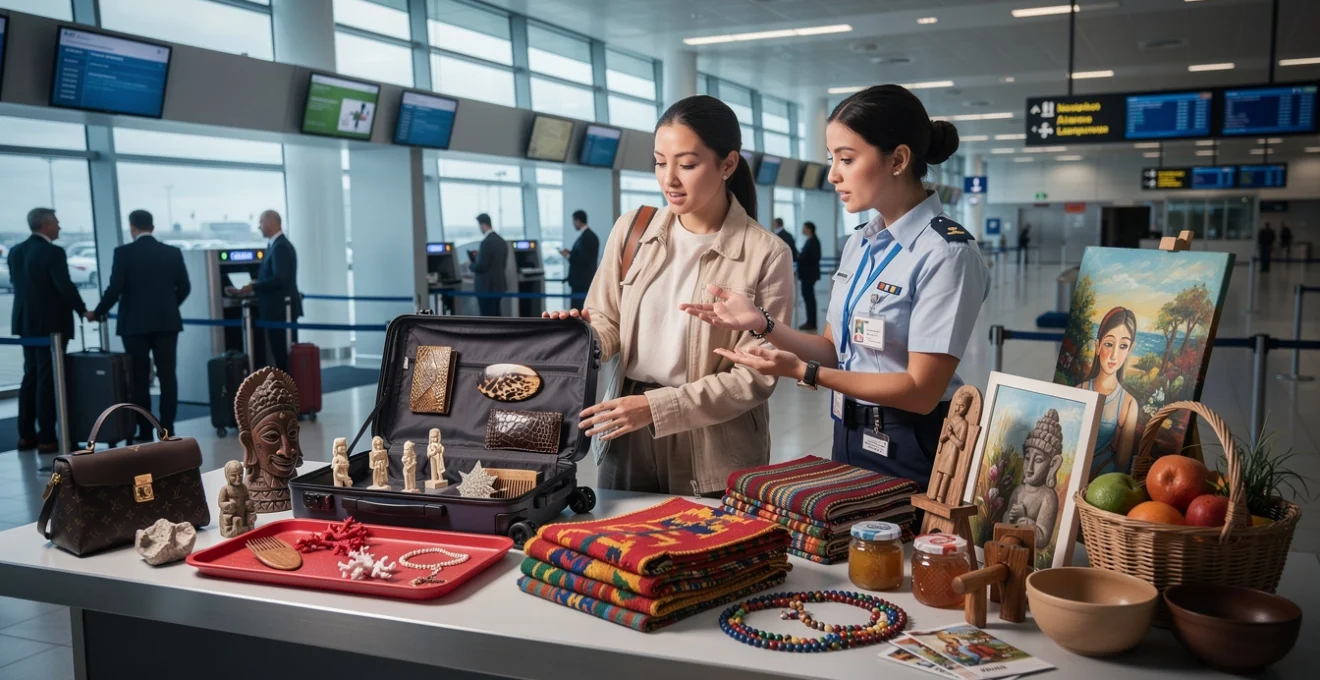
The allure of bringing home a tangible piece of your travels is undeniable. A carved statue from a bustling Asian market, an intricate shell necklace from a tropical beach, or an ancient-looking coin from a Mediterranean bazaar can seem like the perfect memento. However, what feels like an innocent purchase can sometimes have serious legal, ethical, and environmental consequences. Understanding what you can and cannot bring home is essential for every responsible traveller, as ignorance of international regulations offers no protection from substantial fines, confiscation, or even criminal prosecution.
The global souvenir trade, valued at billions of dollars annually, operates within a complex framework of international treaties, national laws, and ethical considerations. From CITES regulations protecting endangered species to UNESCO conventions safeguarding cultural heritage, the rules governing what you can legally transport across borders are far more extensive than most travellers realise. This comprehensive guide will help you navigate these regulations whilst supporting local communities through ethical purchasing decisions.
Understanding CITES regulations and wildlife trade restrictions
The Convention on International Trade in Endangered Species of Wild Fauna and Flora (CITES) represents one of the most significant international agreements governing what you can bring home from your travels. Established in 1975, this treaty now includes 184 member countries and protects over 38,000 species of plants and animals from unsustainable exploitation through international trade. When you purchase souvenirs containing protected species, you’re not just breaking the law—you’re potentially contributing to the extinction of vulnerable wildlife populations.
Identifying CITES appendix I, II, and III listed species products
CITES operates through three appendices, each offering different levels of protection. Appendix I lists species threatened with extinction, for which commercial trade is virtually prohibited. This includes products made from tigers, rhinoceroses, certain primates, and sea turtles. Appendix II covers species not necessarily threatened with extinction but requiring trade controls to prevent unsustainable use. Many orchids, cacti, and hardwood species fall into this category. Appendix III contains species protected in at least one country that has requested assistance from other CITES parties in controlling trade.
The challenge for travellers lies in identifying these products, as vendors rarely advertise that their wares violate international law. Modern DNA testing at customs has become increasingly sophisticated, allowing authorities to identify species from tiny fragments. In 2022, UK Border Force reported a 34% increase in wildlife seizures compared to the previous year, demonstrating heightened enforcement.
Ivory, tortoiseshell, and coral: prohibited Animal-Derived souvenirs
Ivory remains one of the most frequently seized prohibited items at international borders, despite global awareness campaigns about elephant and rhinoceros poaching. The material appears in carvings, jewellery, chess sets, and decorative items across Asia and Africa. Some vendors claim to sell “antique” ivory exempt from regulations, but proving pre-convention age requires extensive documentation that most sellers cannot provide. The penalties can be severe: in the United States, trafficking in elephant ivory can result in fines up to $250,000 and imprisonment.
Tortoiseshell products, derived from critically endangered hawksbill sea turtles, present another common pitfall. The material’s distinctive amber and brown mottled pattern appears in hair accessories, jewellery, and decorative boxes, particularly in Caribbean and Southeast Asian markets. Despite being illegal to trade internationally since 1977, these items remain widely available. Modern plastic alternatives can look remarkably similar, making authentication difficult without expert examination.
Coral souvenirs encompass both precious coral used in jewellery and reef-building corals sold as decorative pieces. With coral reefs declining globally at unprecedented rates—the Great Barrier Reef has lost more than half its coral cover since 1995—purchasing these items directly contributes to ecosystem destruction. Black coral, red coral, and blue coral all receive CITES protection, yet remain common in tourist markets from the Mediterranean to the Pacific.
Exotic reptile leather goods and protected marine species items
Leather goods crafted from crocodiles, alligators, pythons, and monitor lizards occupy a grey area that confuses many travellers. Whilst some reptile leather products
Leather goods crafted from crocodiles, alligators, pythons, and monitor lizards occupy a grey area that confuses many travellers. Whilst some reptile leather products come from legal, licensed farms operating under CITES permits, many others are sourced from wild, often endangered, populations. Belts, boots, handbags, and watch straps made from exotic skins may require export permits from the country of origin and import permits at home, and without these documents, customs officers can seize the item on the spot. As a rule of thumb, if a vendor cannot clearly explain where the leather came from and show relevant paperwork, you should assume the product is risky. Choosing high-quality alternatives made from traditional leather or plant-based materials is usually safer for both wildlife and your travel budget.
Protected marine species create similar problems for responsible souvenir shopping. Dried seahorses, starfish, shark teeth, and manta ray gill plates are all commonly sold to tourists, yet many of these species are under pressure from overfishing and habitat loss. Even if a single shell or dried animal looks harmless, multiplied by millions of visitors a year, the impact on fragile marine ecosystems can be severe. In some countries, authorities now conduct random checks at airports specifically targeting marine curios, with fines and confiscations for illegal wildlife souvenirs. When in doubt, treat any item that used to be alive in the ocean as off-limits and enjoy it in its natural habitat instead.
Endangered plant products: orchids, cacti, and hardwood carvings
Plants might not seem as problematic as animal products, but international rules on endangered flora are just as strict. Many wild orchids, succulents, and cacti are listed under CITES Appendix I or II, meaning that collecting them from the wild and exporting them without permits is illegal. Travellers often encounter tempting displays of miniature cacti, air plants, or “rare” orchids in local markets, yet these plants may have been stripped from fragile ecosystems where they play a vital ecological role. Even when the sale appears casual or small-scale, customs officials can and do seize live plants and impose penalties.
Hardwood carvings pose a different but related challenge for responsible souvenir shopping. Popular tropical timbers such as mahogany, rosewood, and ebony are increasingly regulated because of illegal logging and deforestation. A beautifully carved mask or statue might hide a long chain of environmental harm, from forest degradation to loss of habitat for endangered species. Few vendors can provide proof that the wood came from sustainably managed forests or plantations, and some countries now require export licences for specific timber species. If you love wooden souvenirs, prioritise items clearly labelled as made from fast-growing, locally abundant woods or certified sustainable sources, and avoid products whose sellers seem vague about provenance.
Cultural heritage laws and archaeological artefact export bans
Alongside wildlife protections, cultural heritage laws are a crucial part of understanding what not to bring home. Many countries now have strict rules preventing the export of archaeological artefacts, religious objects, and historically significant items. These laws aim to stop looting, protect sacred sites, and keep national treasures within their country of origin. Buying what looks like an “ancient” coin, statue, or manuscript from a street vendor might feel romantic, but in legal terms it can be comparable to handling stolen property. In recent decades, customs agencies and police forces worldwide have intensified their efforts to stop antiquities trafficking, with high-profile seizures and repatriations regularly making headlines.
UNESCO convention compliance in egypt, greece, and peru
The 1970 UNESCO Convention on the Means of Prohibiting and Preventing the Illicit Import, Export and Transfer of Ownership of Cultural Property underpins many of these protections. Countries such as Egypt, Greece, and Peru have implemented strong national laws aligned with this convention, making it illegal to remove cultural property without government permission. In Egypt, for instance, exporting genuine antiquities—even small fragments—from archaeological sites or museums is strictly prohibited, with harsh penalties that can include long prison sentences. Greece enforces similar rules, treating many objects older than 100 years as potential antiquities that cannot legally leave the country without permits.
Peru, home to Inca and pre-Inca heritage, has also cracked down heavily on the export of archaeological artefacts. Tourists sometimes encounter pottery shards, textiles, or metal objects claimed to be “genuine pre-Columbian finds,” often sold in markets around Cusco or near major sites. In reality, purchasing these items may support looting and irreversible damage to archaeological contexts that scientists rely on for research. Responsible souvenir shopping in such destinations means choosing high-quality, clearly modern reproductions, or locally made crafts inspired by ancient designs, rather than anything claimed to be authentically ancient. If an item is presented as “real” and very old, it is almost certainly something you should not try to bring home.
Antiquities trafficking penalties: italy’s carabinieri art squad cases
Italy provides one of the most striking examples of active enforcement against antiquities trafficking. The Carabinieri Command for the Protection of Cultural Heritage—often known as the Carabinieri Art Squad—has recovered hundreds of thousands of stolen artefacts since its creation in 1969. Their investigations often start with seemingly minor finds, such as coins or small statues intercepted from travellers at airports, and lead to larger smuggling networks. In several high-profile cases, Italian authorities have traced looted items from clandestine excavations all the way to prestigious galleries and private collections abroad.
For the casual traveller, these stories highlight that there is no such thing as a “harmless” piece of looted history. Even a single ancient coin bought in a flea market can trigger an investigation, confiscation, and potentially heavy fines. Italy’s cultural heritage laws presume that unregistered archaeological finds belong to the state, and exporting them without permission is a criminal offence. If you are browsing antique shops or markets in Rome, Naples, or Sicily, always ask for clear documentation proving that items are either modern reproductions or lawfully tradable antiques. When documentation is vague or missing, walking away is the safest—and most ethical—decision.
Religious artefacts and sacred objects export restrictions
Religious artefacts and sacred objects occupy an especially sensitive category in cultural heritage law. Many countries restrict or ban the export of items used in active worship, such as icons, statues, masks, ritual instruments, and temple furnishings. Even when these objects appear old or worn, they may still hold spiritual significance for local communities. Taking them abroad can be perceived not just as illegal, but as deeply disrespectful. In some regions, stolen items have later surfaced for sale online or in foreign markets, prompting calls for repatriation and stricter enforcement.
How can you tell whether a religious souvenir is appropriate to buy? As a rule, anything clearly in use at a place of worship—candlesticks in a church, masks in a shrine, prayer wheels in a monastery—should never be removed or purchased. Many destinations offer ethically made alternatives: locally crafted icons, printed images, or small statues sold through official shops that support religious institutions. If you are unsure, ask local guides or staff at cultural sites where to find legitimate religious-themed souvenirs that respect sacred traditions. Responsible souvenir shopping is as much about understanding cultural boundaries as it is about following written laws.
Colonial-era items and repatriation issues in post-colonial nations
In recent years, debates over colonial-era artefacts and repatriation have intensified, adding another layer of complexity to what travellers should or should not buy. Many post-colonial nations now view certain historical objects—such as royal regalia, ceremonial weapons, or ethnographic collections—as part of their national identity. While these items may already reside in museums or private collections abroad, governments and communities increasingly seek their return. Buying similar objects on the open market can feed into a contentious trade that often lacks clear provenance and may involve stolen or illegally exported items.
For individual travellers, the key is to be cautious about any object presented as an “authentic colonial-era artefact,” especially if the seller cannot provide detailed, verifiable ownership history. A genuine 19th-century mask or ceremonial spear should come with export licences and documentation outlining its legal status. Without this paperwork, you risk confiscation at customs or later legal disputes, not to mention moral concerns about benefiting from historical injustice. Opting for contemporary artworks, crafts, and ethically produced reproductions allows you to appreciate local history without entangling yourself in unresolved colonial legacies.
Counterfeit luxury goods and intellectual property violations
Beyond wildlife and cultural heritage, responsible souvenir shopping also means steering clear of counterfeit luxury goods and other intellectual property violations. Fake designer handbags, watches, sunglasses, and clothing are ubiquitous in tourist markets worldwide. They may seem like a harmless bargain, but buying them supports illegal manufacturing networks, poor working conditions, and sometimes organised crime. Furthermore, many countries treat the import of counterfeit goods as a serious offence, with customs agencies empowered to seize items and issue fines to travellers who attempt to bring them home.
Customs seizure thresholds for fake designer merchandise
Customs authorities in the European Union, United States, Australia, and other regions regularly seize counterfeit goods at airports and land borders. In 2022, EU customs reported seizing nearly 86 million counterfeit items, a significant portion of which were personal imports by travellers. Whilst some jurisdictions may exercise discretion for a single handbag or pair of shoes clearly purchased for personal use, there is no universal “safe” threshold. If officers suspect that the quantity or nature of the items indicates commercial intent, penalties can escalate quickly.
Even for one or two counterfeit items, you are never guaranteed leniency. Some countries impose fines based on the value of the legitimate product, not the price you paid on the street. That cheap “designer” watch bought for €20 could be assessed at hundreds or thousands of euros in estimated retail value, dramatically increasing potential penalties. When you factor in the embarrassment of having your luggage searched and items confiscated in front of other passengers, the supposed bargain quickly loses its appeal. The easiest way to avoid trouble is simple: if the price is unbelievably low for a luxury brand, leave it on the stall.
TRIPS agreement enforcement at international border crossings
The global framework for protecting intellectual property, including trademarks and copyrights, is largely shaped by the WTO Agreement on Trade-Related Aspects of Intellectual Property Rights (TRIPS). Under TRIPS, member countries commit to enforcing IP rights and providing customs authorities with the power to detain suspected infringing goods at the border. Many governments now maintain databases of protected trademarks and cooperate with major brands to identify counterfeits more effectively. As a result, customs officers are increasingly trained to spot subtle differences in logos, stitching, packaging, and labelling.
For travellers, this means that enforcement is no longer limited to large shipping containers or commercial imports. Individual suitcases and carry-on bags are also fair game. Random inspections, x-ray screening, and targeted searches based on flight routes are all used to identify suspicious goods. If you are tempted by a fake luxury item as a holiday souvenir, remember that you are effectively betting your smooth passage through customs against the hope of not being selected for inspection. From a risk–reward perspective, investing in authentic local crafts or mid-range, non-branded items offers far better value and peace of mind.
Criminal liability for trademark-infringing souvenirs
In some jurisdictions, purchasing counterfeit goods can go beyond simple confiscation and enter the realm of criminal liability. Countries such as France and Italy, for example, have laws that allow fines for individuals knowingly buying fake designer items, even if they are not reselling them. Whilst prosecution of tourists remains relatively rare, high-profile enforcement campaigns do occur, particularly in popular coastal resorts and major cities. Local police and customs officers may conduct joint operations targeting street markets well-known for counterfeits.
Trademark-infringing souvenirs are not limited to fashion accessories. You may also encounter fake football shirts, pirated DVDs, unlicensed toys, and unauthorised reproductions of famous artworks. These products often fail to meet safety standards, posing risks such as toxic dyes or unsafe electrical components. When you factor in the potential for legal issues, health hazards, and the broader impact on legitimate businesses, the ethical choice becomes clear. Responsible souvenir shopping means choosing original, fairly priced products made by local artisans or authorised manufacturers, rather than fuelling the global trade in fakes.
Biosecurity risks: food products and agricultural materials
Food and agricultural products can be some of the most tempting souvenirs to bring home. A wedge of local cheese, a handful of fresh spices, or a bag of exotic fruit can evoke powerful memories of your trip. Yet these items also pose significant biosecurity risks, potentially introducing pests, diseases, or invasive species into fragile ecosystems. Many countries therefore impose strict quarantine regulations on what travellers can carry across their borders. Ignoring these rules can result in on-the-spot fines, confiscation, and in severe cases, prosecution.
Quarantine regulations for fresh produce and meat products
Countries with large agricultural sectors—such as Australia, New Zealand, the United States, and many EU states—take biosecurity extremely seriously. Fresh fruit, vegetables, meat, and dairy products are often completely banned from personal luggage, regardless of quantity. Even a single apple, sausage, or vacuum-packed meat product can harbour pests or pathogens that threaten local crops and livestock. Border agencies invest heavily in sniffer dogs, x-ray scanners, and inspection teams to detect undeclared food items in bags and pockets.
As a traveller, the safest approach is to assume that fresh produce and meat belong on your plate during the trip, not in your suitcase on the way home. If you want to share culinary discoveries with friends and family, look for commercially packaged products that explicitly state they are suitable for export and check your destination’s import rules in advance. Many governments provide online tools where you can search specific items to see whether they are allowed. When in doubt, declare everything; honest mistakes are treated far more leniently than attempted concealment.
Seed and plant material restrictions under IPPC standards
The International Plant Protection Convention (IPPC) sets global standards for preventing the spread of plant pests and diseases through international trade and travel. Under these standards, seeds, bulbs, cuttings, and other plant materials are tightly regulated. While a small packet of seeds from a charming local market may seem harmless, it could introduce invasive species or crop diseases if planted in your home garden. Some invasive plants spread so aggressively that they alter entire landscapes and require millions of dollars in control efforts.
Many countries therefore require phytosanitary certificates for plant materials, confirming they have been inspected and are free of harmful organisms. Obtaining such documentation is rarely practical for tourists making casual purchases. Instead, responsible souvenir shopping means buying seeds or gardening products from reputable companies in your home country that import them legally. If you are passionate about plants, consider supporting local botanical gardens or conservation projects at your destination rather than trying to transport live specimens or seeds across borders.
Honey, dairy, and animal-derived food import prohibitions
Products derived from animals—such as honey, cheese, milk powder, and cured meats—pose particular biosecurity concerns. Honey, for example, can carry spores of American foulbrood, a devastating disease of honeybees, while unpasteurised dairy products may harbour dangerous bacteria. As a result, many countries restrict or ban the import of untreated animal products in personal luggage. In the European Union, for instance, travellers from non-EU countries face strict limits on what animal-derived foods they can bring in, with very few exceptions.
The rules can be complex, varying depending on origin, processing methods, and packaging, so it is essential to check official guidance before you shop. If you discover at the airport that your carefully chosen cheese or jar of honey is prohibited, you will have to surrender it, often without any compensation. To avoid disappointment, focus on shelf-stable, plant-based foods that meet import requirements, such as roasted coffee, dried tea, or commercially processed snacks. These items still capture the flavours of your journey while respecting biosecurity rules designed to protect agriculture and ecosystems.
Ethical purchasing frameworks for responsible travellers
Legal compliance is only one aspect of responsible souvenir shopping. Increasingly, travellers also want to ensure their purchases support fair working conditions, environmental sustainability, and cultural respect. Ethical purchasing frameworks can help guide these decisions, offering practical tools to evaluate what you buy. By choosing goods that align with recognised standards, you can turn everyday souvenir shopping into a form of positive impact tourism, channelling your spending toward businesses that treat people and the planet well.
Fair trade certification schemes: world fair trade organization standards
Fair trade certification schemes provide one of the most widely recognised ways to identify ethical products. Organisations such as the World Fair Trade Organization (WFTO) and Fairtrade International set standards covering fair wages, safe working conditions, non-discrimination, and environmental responsibility. When you buy a fair trade-certified souvenir—whether it is a scarf, piece of jewellery, or bag of coffee—you are supporting supply chains that have been independently audited for social and environmental performance. This can be particularly valuable in destinations where information about local labour practices is hard to verify.
Of course, not every ethical product carries formal certification, especially in small artisan communities where certification fees can be prohibitive. In these cases, you can still apply fair trade principles by asking questions: Who made this item? How long did it take? Are the artisans paid fairly? Is the business locally owned? Ethical souvenir shopping is not just about logos on labels; it is about cultivating curiosity and rewarding transparency. When vendors proudly share details about how their goods are made and how profits are shared, that is usually a positive sign.
Artisan cooperatives versus exploitative souvenir manufacturing
One of the most powerful ways to support local economies is to buy from artisan cooperatives rather than mass-produced souvenir outlets. Cooperatives are groups of craftspeople who pool resources, share marketing costs, and collectively negotiate better prices for their work. By cutting out middlemen and large wholesalers, they can keep more income within the community and invest in training, education, and infrastructure. As a result, you are more likely to see high-quality, culturally authentic products whose makers are fairly compensated.
In contrast, many low-cost souvenir shops rely on exploitative manufacturing, with goods produced in distant factories under poor working conditions and imported into tourist destinations. These items often look generic, with identical trinkets appearing in markets from Bangkok to Barcelona. If every stall seems to be selling the same keyrings and magnets, there is a good chance they have little to do with local culture or livelihoods. When you take the time to seek out workshops, community-run boutiques, or fair trade stores, your purchases become part of a more equitable and sustainable tourism model.
Carbon footprint assessment of shipped versus hand-carried items
Another dimension of ethical souvenir shopping is the carbon footprint associated with what you buy. It is easy to overlook emissions when picking up a small object, but the full life cycle—from raw material extraction to manufacturing, packaging, and transport—can be significant. Interestingly, items shipped in bulk via sea freight often have a lower per-unit carbon footprint than goods airfreighted or individually carried in luggage, especially when considering weight and distance. A heavy stone carving or metal sculpture flown home in your suitcase may contribute more emissions than a lightweight textile or small piece of jewellery.
So how can you factor carbon into your souvenir decisions without draining all the joy from shopping? One practical approach is to favour light, durable items made from sustainable materials that you will use for many years. Another is to buy digital or experience-based souvenirs—such as local music downloads, online workshops with artisans, or donations to community projects—that leave no physical footprint at all. If you do want larger pieces, consider whether reputable businesses can ship them using consolidated, lower-emission methods rather than excess baggage on your flight. Ultimately, the greenest souvenirs are those that combine low impact with long-lasting value in your daily life.
Customs declaration requirements and penalty structures
Even when you shop carefully, the final step in responsible souvenir shopping is navigating customs declaration requirements. Most countries require travellers to declare certain categories of goods on arrival, including high-value items, large quantities of alcohol or tobacco, food and agricultural products, and anything subject to CITES or cultural heritage laws. Declaration forms—whether paper or digital—are legal documents, and providing false information can be treated as an offence. Many travellers get into trouble not because of what they bought, but because they failed to declare it honestly.
Penalty structures vary widely between countries, but they typically include confiscation of prohibited items, on-the-spot fines, and, in more serious cases, criminal charges. For example, deliberately smuggling endangered species products or significant cultural artefacts can lead to prosecution, heavy fines, and even imprisonment. Lesser infringements, such as undeclared food or small quantities of restricted goods, may result in fixed penalties but still create a permanent record with border authorities. Repeated violations or signs of commercial intent can trigger much stronger responses, including travel bans or asset seizures.
To protect yourself, adopt a simple rule: when in doubt, declare. Customs officers are generally more understanding when travellers proactively disclose items and seek guidance than when they discover undeclared goods during inspections. Keep receipts, permits, and any relevant documentation together in your hand luggage so you can present them if asked. By combining informed shopping decisions with honest, transparent declarations, you not only safeguard your own travels but also contribute to the broader goals of conservation, cultural preservation, and fair trade that responsible tourism seeks to uphold.