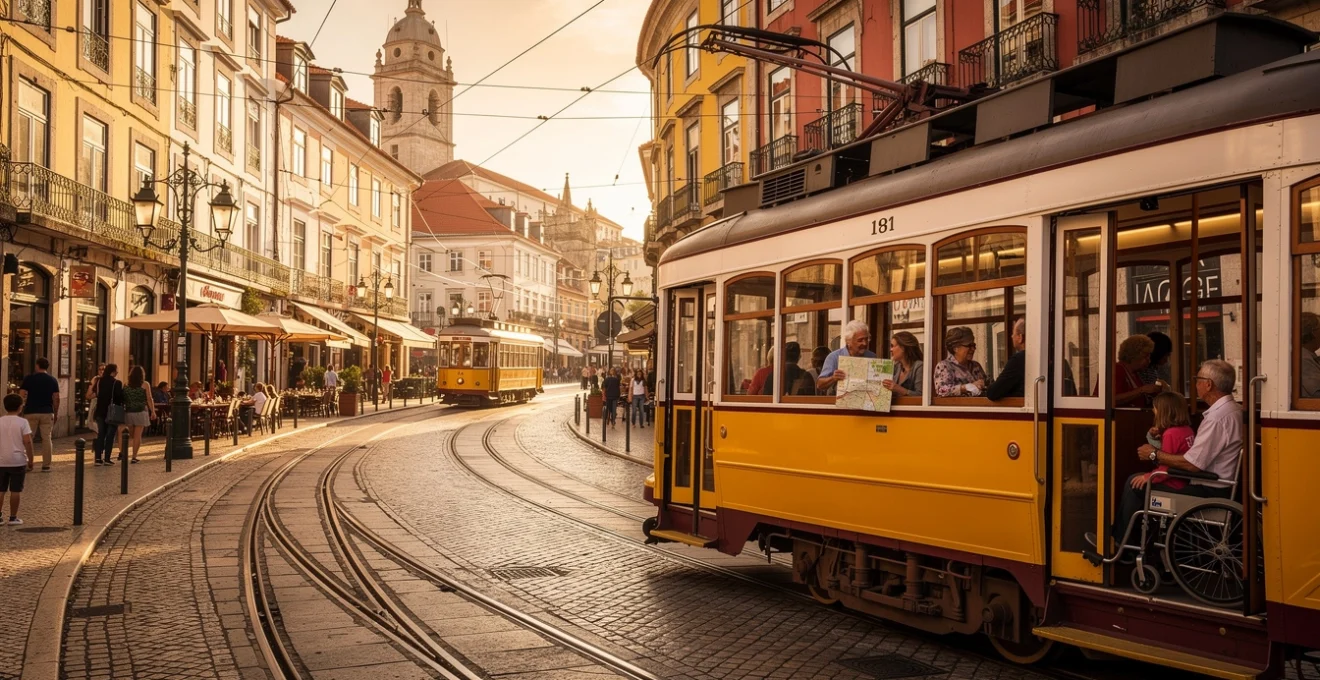
Heritage trams offer an extraordinary window into the past, providing travellers with an intimate and leisurely exploration of historic neighbourhoods that remain inaccessible to most modern transport. These charming rail vehicles, with their distinctive clickety-clack rhythm and unhurried pace, create a unique temporal bridge between contemporary urban life and the architectural treasures of bygone eras. Unlike buses or underground metros that rush passengers through tunnels or along busy arterials, trams glide gracefully through narrow cobblestone streets, past century-old facades, and alongside historic squares where time appears to move at a more civilised pace. The experience transcends mere transportation, transforming into a moving observation deck that reveals the layered history of European cities, from medieval quarters to Art Nouveau districts, all whilst maintaining the authentic atmosphere that makes these neighbourhoods so captivating to explore.
Heritage tram networks: technical infrastructure and route engineering
The engineering marvel behind heritage tram systems represents a sophisticated balance between preserving historical authenticity and meeting modern safety standards. These networks require specialised infrastructure that can accommodate both vintage rolling stock and contemporary accessibility requirements whilst minimising disruption to delicate historic environments. The complexity of integrating electric traction systems into centuries-old urban fabric demands innovative solutions that respect both architectural heritage and operational efficiency.
Modern heritage tram operations typically utilise 1435mm standard gauge track systems, though some historic networks maintain their original narrow gauge specifications to preserve operational authenticity. The infrastructure must accommodate frequent stopping patterns essential for tourist operations, with platforms designed to blend seamlessly into historic streetscapes. Power supply systems often require careful concealment of electrical equipment to maintain visual harmony with surrounding heritage buildings, necessitating underground cable routing and discreetly positioned substations.
Double-track gauge systems in melbourne’s city circle tram network
Melbourne’s iconic City Circle tram demonstrates exceptional engineering in managing dual-gauge infrastructure within a compact historic precinct. The system employs 1435mm standard gauge tracks that navigate through the city’s narrow laneways and around heritage buildings with remarkable precision. The track geometry incorporates specially designed curves with radii as tight as 20 metres, allowing trams to negotiate the challenging urban landscape whilst maintaining passenger comfort and operational safety standards.
The double-track configuration enables efficient bidirectional operations during peak tourist periods, with sophisticated signalling systems managing tram movements through congested intersections. Platform design integrates accessibility features without compromising the historic character of stops, utilising materials and architectural elements that complement surrounding Victorian-era structures. The network’s success lies in its ability to provide frequent service intervals whilst preserving the authentic tramway experience that attracts over two million annual passengers.
Overhead line equipment and pantograph technology in historic districts
The overhead line infrastructure in historic tram networks presents unique aesthetic and technical challenges that require specialised engineering solutions. Traditional catenary systems must be adapted to work harmoniously with historic architecture, often necessitating the use of period-appropriate poles and bracket designs that echo the original installations from the early 20th century. Modern 600V DC power systems provide reliable traction whilst minimising visual impact through careful routing and camouflaged equipment installations.
Pantograph technology has evolved to accommodate the varying overhead line heights common in historic districts, where architectural constraints often dictate non-standard wire positioning. Advanced carbon contact strips ensure reliable current collection whilst reducing wear on both the pantograph and overhead wires, crucial for maintaining consistent service in tourist-heavy environments. The integration of automatic section switches allows trams to navigate complex junction areas without manual intervention, enhancing both operational efficiency and passenger experience during heritage tours.
Junction design and crossover points in prague’s malá strana quarter
Prague’s historic Malá Strana district showcases exemplary junction engineering that enables tram operations through some of Europe’s most constrained medieval streets. The crossover points utilise spring-loaded switch mechanisms that automatically align based on approach direction, eliminating the need for manual operation whilst maintaining the historic appearance of traditional point work. These junctions incorporate noise-dampening technologies essential for operations in residential historic areas, utilising rubber-cushioned rail fastenings and specialised track geometries.
The engineering challenge involves managing
conflicting traffic flows at low speeds, maintaining schedule reliability even where sightlines are limited by historic buildings. Embedded sensors and remote monitoring now allow operators to detect wear at junctions before failures occur, an essential safeguard when disruption in a UNESCO-listed quarter would have significant economic and reputational impacts. For visitors, the benefit of this technical refinement is simple: smooth tram rides through Malá Strana’s narrow streets with minimal vibration, reduced squeal on tight curves, and shorter waiting times at complex intersections.
Track bed construction methods for cobblestone integration
Integrating tram tracks into cobblestone streets is one of the most delicate aspects of heritage tramway engineering. The track bed must support heavy axle loads, resist water ingress, and limit vibration transmission to nearby structures, all while preserving the visual continuity of historic paving. Many cities now use a concrete slab track with resilient pads beneath the rails, then re-lay original cobblestones in a carefully graded bedding layer, ensuring both drainage and stability. This approach avoids the “patched” appearance that can result from modern asphalt infill and keeps the heritage character intact.
From a traveller’s perspective, this invisible engineering is what makes a heritage tram ride feel so authentic. You see the same cobblestones that carriages once crossed, yet you benefit from 21st‑century ride quality and noise control. Advanced elastomeric materials between the rail and the stone absorb vibration, protecting fragile facades from micro-cracking and preventing the uncomfortable “hammering” sensation sometimes associated with older tramways. In wet or icy conditions, well-designed drainage channels and non-slip stone finishes improve safety for both pedestrians and passengers alighting onto the street-level track bed.
Rolling stock analysis: historic tram models and modern heritage vehicles
Behind every memorable tram journey lies a carefully curated fleet of vehicles that balance nostalgia with reliability. Heritage tram systems typically operate a mix of fully restored historic cars and modern replicas built to vintage designs, each complying with current safety and accessibility standards. Operators must consider factors such as braking performance, door configuration, and interior layout while preserving period details like timber panelling, brass fittings, and traditional seating patterns. For heritage tourists, these decisions shape everything from comfort levels to the authenticity of the on-board atmosphere.
Rolling stock management in historic networks also requires a robust maintenance regime. Many vehicles are over 70 years old, relying on components that are no longer mass-produced and often need to be custom-fabricated. Workshop teams blend traditional craftsmanship with modern diagnostics, using techniques such as 3D scanning to reproduce worn parts while maintaining original specifications. As you sit by the window, watching historic neighbourhoods pass by, you are effectively travelling in a moving museum exhibit that must still meet the same reliability targets as any contemporary urban tram service.
Lisbon’s remodelado trams: 1930s engineering and tourist applications
Lisbon’s iconic Remodelado trams are among the most recognisable heritage vehicles in Europe, particularly on the steep and winding routes of lines such as 28E. Originally built in the 1930s, these four-axle cars were extensively modernised in the late 20th century to incorporate updated electrical equipment and improved braking systems, while preserving their vintage appearance. Their compact dimensions, robust chassis, and high-powered traction motors allow them to tackle gradients of up to 13%, a critical capability in the city’s hilly historic quarters. For travellers, this translates into dramatic climbs past tiled facades, viewpoints, and hidden squares that coaches simply cannot reach.
Despite technological upgrades, the Remodelado fleet retains classic features such as wooden seats, manual destination blinds, and the distinctive cream-and-yellow livery that has become a symbol of Lisbon. Doorways remain narrow and steps steep, reflecting design standards of another era, so you should be prepared for limited accessibility compared to fully modern low-floor trams. However, scheduled headways and careful speed regulation help maintain safety on tight curves and shared street sections, where pedestrians, cars, and trams coexist in close proximity. For many visitors, a ride on these trams is as essential to experiencing historic Lisbon as visiting Belém or the Alfama district.
San francisco cable car grip mechanisms and Powell-Hyde line operations
Although technically cable cars rather than electric trams, San Francisco’s historic lines illustrate another form of heritage rail-based transport that shapes how you discover a city’s older districts. The Powell–Hyde line, for example, uses grip cars equipped with a manually operated mechanism that clamps onto a continuously moving cable beneath the street surface. Operators, known as gripmen, must finely adjust the grip pressure to start, stop, and maintain speed on the city’s famously steep gradients. This mechanical ballet, performed hundreds of times a day, offers an engineering spectacle as compelling as the sweeping bay views.
From a systems perspective, the cable car network relies on central powerhouse machinery that drives steel cables at a constant speed, typically around 9.5 mph (15 km/h). Junctions and curves are managed through complex cable routing in underground conduits, requiring precise alignment to avoid derailments or cable wear. As a passenger, you experience this engineering as a rhythmic, slightly jerky motion and the characteristic hum of the cable under your feet, particularly noticeable when cresting hills. Capacity is lower than that of modern light rail, so queues can form at terminals, but the slow pace and open-platform design encourage conversation, photography, and a deeper appreciation of the city’s historic streetscapes.
Amsterdam’s blue trams: GVB fleet specifications and route optimisation
Amsterdam’s historic “Blue Trams” once defined urban travel in the Dutch capital, and while the original series ceased operation in the mid‑20th century, replicas and restored vehicles occasionally appear on special heritage services. Operated by the city’s transport company, GVB, these cars illustrate how fleet specifications are tailored to dense, canal-side environments. Shorter car bodies, tight minimum turning radii, and carefully calibrated acceleration limits help protect fragile quay walls and ensure smooth progress through narrow streets and sharp junctions. When deployed on heritage routes, they offer travellers an evocative way to trace historic corridors between central squares, markets, and residential quarters.
Contemporary planning of heritage-style operations in Amsterdam relies heavily on route optimisation to minimise conflicts with high-frequency modern services. Timetables are structured so that heritage trams occupy less congested time slots, often during mid-morning or late afternoon, when tourist demand is still strong but commuter flows have eased. On-board, you may notice a hybrid interior: vintage-inspired furnishings combined with discreet modern systems such as GPS-based announcements, CCTV, and electronic braking controls. This careful blend allows you to enjoy the charm of the Blue Tram aesthetic without sacrificing safety or reliability on shared infrastructure.
Vienna ring tram: siemens ULF low-floor technology integration
The Vienna Ring Tram is a prime example of how modern low-floor technology can be adapted for heritage sightseeing. Using customised Siemens ULF (Ultra Low Floor) vehicles, the service operates a circular route around the Ringstrasse, passing grand 19th‑century buildings, parks, and cultural institutions. The ULF design achieves a floor height as low as 180 mm above rail level, thanks to compact bogie technology and distributed drive components. For you as a passenger, this means barrier-free boarding at most stops, even when platforms are integrated directly into the historic streetscape with minimal height differences.
Inside, the Ring Tram balances comfort, accessibility, and heritage interpretation. Panoramic windows, recorded commentary in multiple languages, and clear route displays create the feel of a moving exhibition, while the exterior livery distinguishes it from standard municipal services. Technically, the vehicles share infrastructure with Vienna’s regular tram network, adhering to the same signalling and power standards, which simplifies maintenance and reduces operating costs. By deploying advanced rolling stock on a heritage-focused route, Vienna demonstrates that tram travel can offer a relaxed, fully accessible way to discover historic neighbourhoods without relying solely on restored vintage vehicles.
Urban planning integration: tram-centric historic precinct development
Heritage tram systems do more than move tourists; they actively shape how historic precincts evolve and function. Urban planners increasingly treat tram corridors as structural elements around which pedestrian zones, public squares, and mixed-use developments are organised. In many European cities, the introduction or revival of tram routes through old quarters has gone hand-in-hand with traffic calming measures, reduced car access, and streetscape upgrades. The result is a more walkable, human-scale environment where you can step off the tram and explore streets that feel deliberately designed for slow, immersive discovery.
From a policy perspective, tram-centric planning supports both heritage conservation and sustainable mobility. Fixed rail lines signal long-term investment, encouraging building owners to restore facades and adapt ground-floor spaces for cafes, small shops, and cultural venues that cater to steady visitor flows. Cities such as Bordeaux, Strasbourg, and Kraków have used tram alignments as catalysts for redesigning riverfronts and market areas, weaving tracks into plazas rather than around them. When you ride through these districts, the tram becomes more than a vehicle; it acts as a moving landmark that connects a network of revitalised public spaces.
However, fitting tram corridors into fragile historic fabric is not without challenges. Heritage authorities may restrict pole placement, track widening, or the removal of mature trees, forcing engineers to work with existing alignments or adopt single-track sections to preserve key views. There are also concerns about “over-tourism” in neighbourhoods suddenly made more accessible by a high-profile tram route. Successful schemes therefore combine infrastructure with management strategies: timed service patterns, zoning for local businesses, and design codes that protect residential character. When done well, tram-centric development turns historic neighbourhoods into living districts rather than open-air museums, supporting both visitors and long-term residents.
Passenger experience design: accessibility and heritage tourism interface
The quality of your experience on a heritage tram is shaped as much by design details as by the surrounding scenery. Passenger experience design in these systems aims to reconcile three sometimes competing goals: preserving historic character, ensuring accessibility, and delivering clear, tourist-friendly information. Think of it as curating a small museum space that also needs to work as everyday public transport. Seating layouts, grab rail positions, step heights, and door operations are all scrutinised so that older vehicles remain safe and usable for a diverse passenger base, including families with pushchairs and travellers with limited mobility.
Many operators address accessibility constraints by pairing vintage trams with modern low-floor vehicles on parallel routes or by retrofitting subtle aids such as retractable ramps and priority seating zones. Wayfinding is another crucial element: multilingual signage, schematic route maps, and on-board announcements help you orient yourself in unfamiliar historic districts. Increasingly, QR codes or app-based guides supplement traditional paper leaflets, offering audio tours and augmented-reality overlays triggered as the tram passes key landmarks. This digital layer transforms a relaxed ride into an interpretive journey, particularly valuable if you prefer to explore independently rather than join a guided group.
Comfort and ambience also matter when choosing to discover a city by tram rather than by bus or metro. Soft lighting, restored woodwork, and openable windows contribute to the sense of stepping back in time, while climate control and noise insulation meet modern expectations. Some networks schedule quieter “observation” services during off-peak hours, reducing crowding and giving photographers space to move between windows. By consciously designing for slower travel and visual engagement, heritage tram operators enable you to savour details—shopfronts, balconies, street markets—that would blur past from inside a car or underground train.
Economic impact assessment: heritage tram systems and local business development
Heritage tramways can generate significant economic benefits for the districts they serve, often far beyond the revenue from ticket sales. By channelling a steady flow of visitors through specific corridors, tram routes effectively act as moving marketing platforms for local businesses. Cafés, independent shops, galleries, and small hotels located near stops typically enjoy increased footfall, especially when stops are integrated with attractive public spaces rather than isolated on busy traffic islands. In some cities, property values along popular heritage lines have risen measurably, reflecting the premium attached to well-connected, character-rich locations.
Quantifying these impacts requires careful data collection, but case studies provide useful benchmarks. For example, assessments of tram-focused regeneration projects in cities like Porto and Strasbourg have documented boosts in retail turnover and new business registrations within a few years of route enhancements. Tour operators frequently package tram rides with walking tours, museum visits, or food tastings, creating multiplier effects as spending spills into adjacent sectors. When you choose to explore by tram, you are not only enjoying a relaxed journey; you are also contributing to a local economic ecosystem that supports heritage preservation and entrepreneurship.
Of course, economic gains must be balanced against investment and operating costs. Heritage fleets are more maintenance-intensive than standard vehicles, and track upgrades in historic streets can be expensive due to archaeological constraints and premium materials. Cities that succeed tend to adopt diversified funding models, combining public transport budgets with tourism levies, cultural grants, and private sponsorship. Some operators host special “event trams” for festivals or corporate functions, generating additional income while showcasing historic neighbourhoods after dark. For residents, the key is that these systems remain more than tourist novelties: when tram-based tourism supports everyday shops, services, and jobs, it strengthens the long-term viability of historic communities rather than transforming them into stage sets.