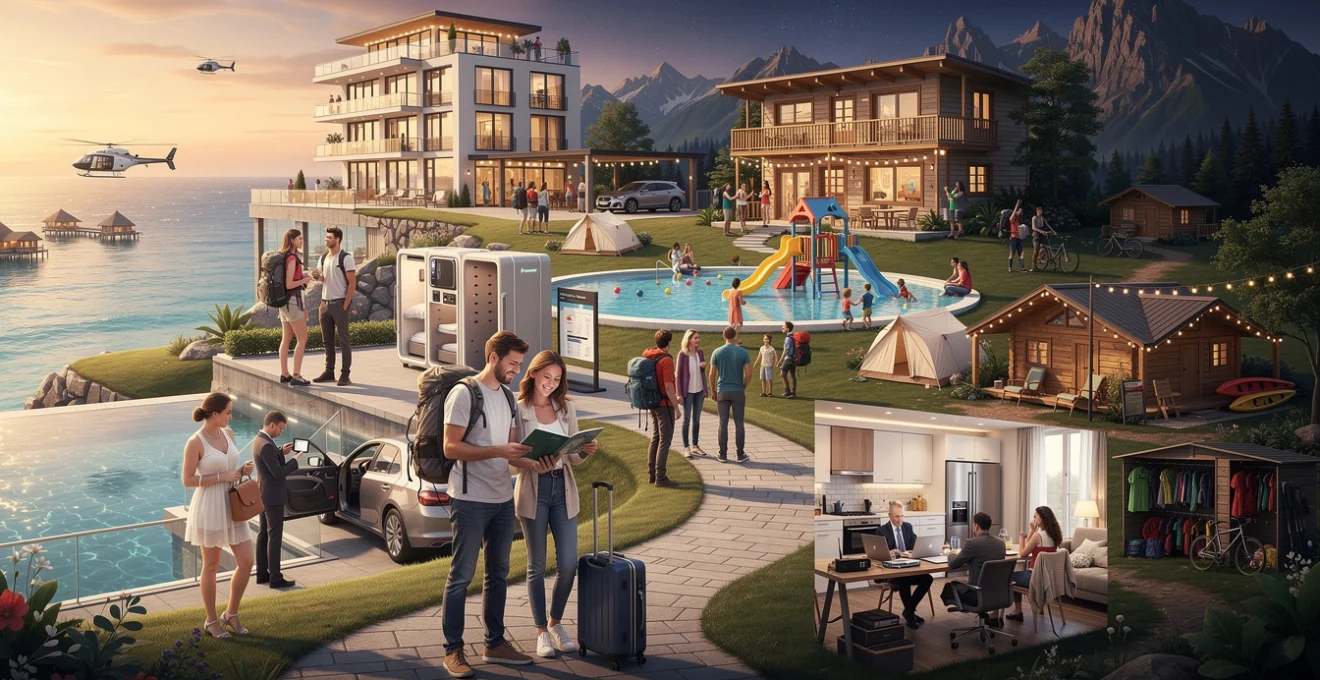
Choosing accommodation that truly aligns with your travel preferences can transform an ordinary trip into an extraordinary experience. The modern travel landscape offers an unprecedented variety of lodging options, from ultra-luxury private villas to innovative co-living spaces designed for digital nomads. Understanding your personal travel style isn’t just about comfort—it’s about maximising the value of your investment and ensuring every moment of your journey serves your specific needs and desires.
The days of one-size-fits-all accommodation are long gone. Today’s savvy travellers recognise that where you stay shapes how you experience a destination, influences your daily rhythm, and can even determine whether you return home feeling refreshed or exhausted. Whether you’re seeking transformative luxury experiences, budget-conscious adventures, or functional business travel solutions, the key lies in matching your accommodation choice to your fundamental travel motivations and practical requirements.
Luxury traveller accommodation preferences: from Five-Star hotels to private villa rentals
Luxury travel has evolved far beyond thread count and marble bathrooms. Today’s discerning travellers seek experiences that reflect their personal values whilst delivering uncompromising quality and service. The luxury accommodation market now encompasses everything from heritage grand hotels with century-old traditions to cutting-edge eco-luxury resorts that prioritise sustainability without sacrificing indulgence.
The decision between established luxury hotel brands and private villa rentals often comes down to your desired level of personalisation versus professional service infrastructure. Five-star hotels excel at providing consistent, world-class service with teams trained to anticipate guest needs, whilst private villas offer unparalleled privacy and the ability to customise every aspect of your stay.
Michelin-starred hotel restaurants and concierge services at properties like the Ritz-Carlton
Elite hotel brands have transformed their properties into comprehensive lifestyle destinations, where culinary excellence becomes integral to the luxury experience. Properties featuring Michelin-starred restaurants or renowned celebrity chefs create immersive gastronomic journeys that eliminate the need to venture far from your accommodation for exceptional dining experiences.
Concierge services at top-tier hotels have evolved into personal lifestyle management, capable of arranging everything from private museum tours after hours to securing impossible-to-get restaurant reservations. These services represent genuine value for luxury travellers who prioritise time efficiency and exclusive access over cost considerations.
Private butler services and helicopter transfer options at exclusive resorts
The pinnacle of luxury accommodation now includes dedicated personal staff who learn your preferences and maintain continuity throughout your stay. Private butler services extend beyond traditional hospitality to include wardrobe management, travel coordination, and even personal shopping assistance, creating a seamless bubble of personalised service.
Helicopter transfers and private aviation access represent the ultimate in luxury travel convenience, particularly for destinations where ground transportation is time-consuming or logistically challenging. These services transform travel time from a necessary inconvenience into part of the luxury experience itself.
Overwater bungalows in bora bora versus penthouse suites in manhattan
The choice between exotic natural luxury and urban sophistication reflects deeper preferences about how you recharge and what environments inspire you. Overwater bungalows offer complete immersion in pristine natural environments, where the accommodation becomes part of the landscape and daily rhythms align with natural cycles.
Penthouse suites in cosmopolitan cities provide luxury within cultural and business centres, offering convenience, accessibility, and the energy that comes from being at the heart of urban activity. These environments suit travellers who find inspiration in human creativity and metropolitan sophistication.
Wine cellar access and spa treatment packages at luxury wellness retreats
Luxury wellness retreats have redefined what constitutes premium accommodation by integrating holistic health experiences directly into the lodging experience. Properties featuring private wine cellars, meditation spaces, and comprehensive spa facilities create environments where luxury and wellness merge seamlessly.
These retreats often include personalised wellness programmes, nutritional consultations, and spa treatment packages that transform accommodation from simply a place to sleep into a comprehensive lifestyle reset experience. The investment extends beyond accommodation to encompass personal transformation and long-term wellness benefits.
Budget-conscious backpacker lodging solutions: hostels, capsule hotels, and alternative stays
For budget-conscious travellers, accommodation is less about Egyptian cotton sheets and more about stretching every dollar without sacrificing safety or basic comfort. The right budget stay can actually enhance your trip by connecting you with a community of like-minded travellers and freeing up funds for experiences rather than excess. The key is knowing when a hostel dorm bed makes sense, when a capsule hotel is more efficient, and when alternative stays like Couchsurfing or glamping better fit your travel style and risk tolerance.
As global travel costs continue to rise, especially in major cities, understanding the spectrum of budget accommodation options has never been more important. According to several major booking platforms, average nightly rates in popular European capitals have increased by 15–25% over the last five years, making strategic choices essential for long-term or slow travel. By aligning your accommodation with your priorities—social interaction, privacy, location, or unique experiences—you can keep your budget in check without feeling like you are constantly compromising.
YHA hostel networks across europe and generator hostel brand analysis
Traditional hostel networks such as YHA (Youth Hostels Association) across the UK and parts of Europe have long been a reliable option for budget travellers seeking clean, safe, and often scenic places to stay. YHA properties frequently occupy historic buildings or countryside locations, appealing to hikers, cyclists, and students who value access to nature and cultural heritage over nightlife. These hostels are typically family-friendly, with clear rules, structured check-in procedures, and membership benefits that can reduce nightly rates over multiple stays.
On the other end of the spectrum, design-forward hostel brands like Generator focus on urban hubs such as London, Paris, and Berlin, combining hostel pricing with boutique hotel aesthetics. Generator hostels often feature industrial-chic interiors, lively bars, co-working spaces, and private as well as shared rooms, catering to digital nomads, young professionals, and social backpackers. When comparing YHA and Generator, ask yourself: do you prioritise quiet communal kitchens and hiking trails, or rooftop bars, DJ nights, and proximity to city attractions?
When selecting a hostel, look beyond price and examine factors such as security lockers, 24-hour reception, gender-specific dorms, and the overall guest rating for cleanliness. Reviews that repeatedly mention noise, safety concerns, or unreliable Wi-Fi are red flags if you plan to work on the road or travel solo. Think of your hostel choice as choosing a “base camp culture”: the vibe in the common area will often shape who you meet and how you spend your evenings.
Japanese capsule hotel experiences in tokyo’s shibuya district
Capsule hotels in Tokyo’s Shibuya district represent a uniquely Japanese solution to the challenge of limited space and high accommodation costs. Originally developed for salarymen who missed the last train home, capsule hotels have evolved into sleek, tech-driven spaces that appeal to curious travellers seeking efficient, minimalist lodging. Modern capsules often feature individual lighting, power outlets, small TVs, and privacy blinds, giving you more personal space than a traditional dorm bunk while still keeping costs lower than a standard hotel room.
Staying in a Shibuya capsule hotel is as much a cultural experience as a practical choice. You will likely encounter gender-segregated floors, shared bathhouse-style facilities, and strict rules about luggage storage and noise, all reflecting Japanese respect for order and consideration of others. For travellers who value privacy when sleeping but don’t mind communal bathrooms, capsules strike a compelling balance between hostel and hotel.
However, capsule hotels may not suit everyone. If you are claustrophobic, travelling with large suitcases, or need a private space to take calls or work late into the night, the compact design can quickly feel restrictive. Before booking, check capsule dimensions, luggage policies, and whether the property offers dedicated lounge or co-working areas where you can spread out. In dense urban centres around the world, “micro-hotels” and pod-style accommodations are following this Japanese template, offering budget-friendly comfort in prime locations.
Couchsurfing platform safety protocols and host verification systems
For ultra budget-conscious travellers, Couchsurfing and similar hospitality exchange platforms offer free accommodation in exchange for cultural exchange and social interaction. Rather than being a “free hotel,” Couchsurfing is best approached as a community built on trust, shared interests, and mutual respect between hosts and guests. When used thoughtfully, it can lead to some of the most meaningful travel experiences you will have, from shared home-cooked meals to insider tours of neighbourhoods that never appear in guidebooks.
Safety, however, must be your first priority. Couchsurfing platforms typically include verification systems—such as ID checks, address confirmation, and payment-based verification badges—along with detailed profiles and public reviews. You should read host profiles carefully, look for consistent positive feedback over several years, and pay attention to how hosts describe their house rules, lifestyle, and expectations. A well-written profile with clear boundaries is usually a good sign of a responsible host.
As a guest, you can increase your own security by sending personalised requests, arranging video calls beforehand, and always having a backup accommodation option booked for the first night in case something feels off upon arrival. Much like sharing a ride with a stranger, Couchsurfing works when both sides follow agreed norms and trust their instincts. If you are introverted or prefer predictable routines, you may find structured hostels or guesthouses less emotionally demanding than staying in someone’s private home.
Glamping sites in new zealand’s south island for budget adventure travel
Glamping—“glamorous camping”—has emerged as a middle ground for travellers who love nature but dislike traditional camping discomforts. In adventure destinations like New Zealand’s South Island, glamping sites often feature pre-pitched safari tents, yurts, or tiny houses equipped with real beds, heating, and sometimes private bathrooms, all set in spectacular landscapes. They are ideal base camps if you are planning activities such as hiking the Routeburn Track, kayaking in Milford Sound, or exploring the Queenstown adventure circuit.
While glamping is typically more expensive than a basic campsite, it can still be a cost-effective alternative to hotels in high-demand areas, especially if you are sharing with a partner or small group. Many glamping properties emphasise sustainability, using solar power, composting toilets, and locally sourced materials, making them appealing if eco-friendly travel is part of your personal travel style. Compared with a hostel in town, you trade walkable nightlife for star-filled skies and early morning birdsong.
Before booking, check what is actually included: are linens, heating, and kitchen facilities provided, or will you need to bring your own gear and cook on basic camping stoves? Understanding these details prevents surprises and helps you compare glamping sites fairly against cabins, motels, or hostels. If your idea of the perfect stay is waking up to mountain views without wrestling with tent poles, glamping can be a smart way to balance comfort and budget in nature-focused destinations.
Family-oriented accommodation infrastructure: kid-friendly amenities and multi-generational spaces
When you travel as a family, your accommodation has to work much harder than when you travel solo or as a couple. It becomes not only a place to sleep, but also a play area, dining room, quiet zone for naps, and sometimes even a classroom. The best family-friendly accommodation anticipates these needs with kid-focused amenities, flexible spaces, and safety features that reduce parental stress and make holidays feel like actual holidays.
Multi-generational travel, where grandparents, parents, and children share a trip, adds another layer of complexity. You must balance differing mobility levels, privacy requirements, and activity interests under one roof. Choosing the right type of property—resort, apartment-style hotel, or family suite—can mean the difference between constant negotiation and a relaxed, collaborative stay where everyone has room to breathe.
Resort kids’ clubs at center parcs and club med properties
Resort brands such as Center Parcs and Club Med have built their reputations on family-oriented infrastructure, with kids’ clubs at the heart of their offering. These supervised spaces provide age-segmented activities—from arts and crafts for younger children to sports and adventure games for teens—allowing parents a few hours of genuine downtime. In many properties, kids’ clubs are staffed by trained childcare professionals, often multilingual, who follow clear safety procedures and sign-in/sign-out protocols.
For parents, the value of these services goes beyond entertainment; they create opportunities for adults to enjoy spa treatments, romantic dinners, or high-intensity activities like scuba diving without juggling childcare. When comparing resorts, look closely at age limits, opening hours, language support, and whether activities are included in the package or charged separately. A kids’ club that only operates for two hours a day or excludes toddlers could dramatically change how restful your holiday feels.
Center Parcs, with its forest settings and indoor waterparks, is ideal for families who love nature but appreciate the predictability of an enclosed, car-free environment. Club Med, with its “all-inclusive” model, often suits families who prefer beach or ski destinations and want to avoid constant decisions about meals and activities. Consider your family’s energy levels and interests: do you want a schedule full of structured activities, or more free play with a few organised options sprinkled in?
Apartment-style hotels with kitchen facilities in orlando theme park districts
Theme park destinations like Orlando present a distinct set of challenges for families: early starts, overstimulation, and the expense of eating every meal out. Apartment-style hotels with kitchen facilities offer a practical solution, especially for stays longer than three or four nights. Having access to a full or partial kitchen makes it easier to manage dietary needs, prepare quick breakfasts, and keep snacks on hand for park days, which can significantly reduce costs and meltdowns.
In Orlando’s theme park districts, many properties blend hotel services—such as housekeeping, shuttle buses to the parks, and 24-hour reception—with apartment layouts that include separate bedrooms, living areas, and laundry facilities. This separation of spaces is a game-changer for families with young children, allowing parents to stay up after bedtime without whispering in the dark. It also helps multi-generational groups maintain a sense of personal space while sharing a common base.
When evaluating apartment-style hotels, pay attention to distance from the parks, shuttle schedules, and parking fees, as daily transfers can add up in both time and money. Consider whether you prefer being inside an official resort bubble with early park entry perks, or in an off-site apartment with larger living areas and better value. As with all family accommodation, the “right” choice depends on your tolerance for commuting versus your need for space and cooking facilities.
Interconnecting room configurations at holiday inn family suites
For families who still want the predictability and loyalty benefits of global hotel brands, interconnecting rooms and family suites offer a flexible alternative to full apartments. Chains such as Holiday Inn have developed family-specific configurations that link two rooms with an internal door, often pairing a standard double room for parents with a twin or bunk-bed room for children. This design combines privacy with peace of mind, as you maintain separate sleeping areas while keeping everyone on the same secure floor.
Holiday Inn Family Suites and similar offerings often add child-friendly touches such as themed décor, gaming consoles, or dedicated kids’ TV channels, helping younger travellers feel considered rather than just “added on” to an adult-oriented space. Some properties also provide welcome packs, children’s menus, and discounted or free stays for kids sharing rooms with parents, improving overall value. For families who prioritise simplicity and predictable standards, these branded suites can be an efficient solution.
Before booking, request a specific confirmation of interconnecting rooms, as simply reserving two adjacent rooms does not always guarantee a connecting door. During peak seasons, these configurations are in high demand, so booking early and calling the property directly to confirm can be essential. If you are travelling with teenagers who want independence, interconnecting rooms can be a bridge between full supervision and separate rooms on different floors.
Childproofing standards and playground facilities at family resort chains
Safety and play are non-negotiable considerations when choosing accommodation for young children. Family resort chains increasingly highlight childproofing standards—such as window restrictors, socket covers, stair gates, and balcony rail heights—in their marketing materials, but it is worth verifying what is standard and what must be requested in advance. A room that feels harmless to adults can contain multiple hazards for toddlers exploring a new environment at ground level.
On-site playgrounds, splash pads, and shallow pools play a critical role in how enjoyable a property feels day-to-day. These spaces provide low-effort entertainment options that do not require planning or travel, perfect for days when you want to stay close to “home base.” When comparing properties, look for shaded areas, soft ground surfaces, lifeguards at pools, and clear signage about age and height restrictions for equipment.
If you are travelling with multi-generational groups, consider how accessible playgrounds and pools are for older relatives as well—are there ramps, seating areas, and nearby cafés or lounges? The ideal family resort allows different generations to share space comfortably without everyone doing the same activity. In practice, this might mean children rotate between the playground and kids’ club while grandparents enjoy a café terrace overlooking the action, all within a compact, walkable layout.
Business traveller executive accommodation: corporate rates and productivity-focused amenities
Business travellers approach accommodation with a different set of priorities: reliability, connectivity, and efficiency. When you are flying in for a two-day conference or a week of client meetings, your hotel or serviced apartment becomes a temporary office as much as a bedroom. The right executive accommodation supports productivity with fast, stable Wi-Fi, quiet workspaces, and services that minimise friction around transport, meals, and time zones.
Corporate travel policies often dictate budget bands and preferred chains, but you can still make strategic choices within these constraints. Many hotel groups offer negotiated corporate rates that include perks such as breakfast, late check-out, and access to executive lounges, which can offset higher nightly prices. Executive lounges, in particular, provide a quiet environment with complimentary refreshments, meeting spaces, and sometimes dedicated concierge support, all of which are invaluable when you are working across multiple time zones.
Look for properties that clearly advertise high-speed internet with published minimum bandwidth, multiple power outlets near the desk and bed, ergonomic chairs, and adequate lighting, as these small details have a cumulative impact on how effectively you can work. Soundproofing is another underrated factor—thin walls or noisy corridors can disrupt sleep before key presentations. Proximity to business districts, airports, or convention centres should be balanced against quality of rest: a slightly longer commute can be worth it if it means a quieter, more restorative environment.
Finally, consider wellness and routine. Increasingly, business hotels are upgrading gyms, offering healthy in-room dining options, and providing jet lag–friendly amenities such as blackout curtains and white noise machines. If you are on the road frequently, these features help maintain consistency in your sleep, exercise, and diet habits, reducing burnout. In a sense, your executive accommodation becomes a portable version of your home office and wellness routine, supporting performance rather than simply housing you between meetings.
Adventure tourism basecamp selection: proximity to outdoor activities and equipment storage
For adventure travellers, accommodation functions as a basecamp rather than a destination in itself, but its role is no less critical. The best adventure lodges, mountain huts, or surf camps are strategically located near the activities you care about most, with infrastructure designed to handle gear, early starts, and muddy returns. Staying too far from trailheads, dive centres, or ski lifts can erode precious daylight hours and increase fatigue, turning an exciting expedition into a daily logistics puzzle.
When selecting a basecamp, start by mapping your core activities and checking realistic travel times rather than simple distances. A lodge that is “only 20 kilometres” from a national park entrance might still involve an hour of winding mountain roads each way. Properties that cater specifically to hikers, climbers, surfers, or skiers often provide early breakfast options, packed lunches, drying rooms, and guided excursions, making it easier to maximise time outdoors. Think of them as specialised workshops compared to generalist hotels.
Equipment storage and maintenance facilities are another crucial consideration. Secure ski lockers, surfboard racks, bike storage rooms, and designated gear washing areas protect your investment and keep living spaces comfortable. In high-altitude or remote locations, some lodges also offer rental equipment, oxygen, or specialised safety gear, allowing you to travel lighter and adapt to local conditions. Asking detailed questions about these facilities before booking can prevent frustrating improvisations on arrival.
Finally, evaluate safety and communication. Adventure-focused properties should provide clear information on local hazards, weather patterns, and emergency procedures, along with basic first-aid supplies and, ideally, staff trained in rescue or wilderness response. Reliable Wi-Fi or radio communication may be limited in remote areas, so understand what is realistic and adjust your expectations accordingly. For many adventure travellers, the perfect stay is one where logistics disappear into the background, letting the landscape and activity take centre stage.
Digital nomad co-living spaces: high-speed internet infrastructure and remote work facilities
Digital nomads blur the line between travel and everyday life, so their accommodation needs are closer to those of long-term residents than short-term tourists. Co-living spaces designed for remote workers recognise this by combining private rooms or studios with shared offices, community events, and all-inclusive utilities. In these environments, high-speed internet is not a bonus—it is a lifeline. A charming villa with unreliable Wi-Fi quickly becomes unusable if you depend on video calls and large file transfers.
When evaluating co-living options, dig deeper than the phrase “fast Wi-Fi.” Look for specific claims about fibre-optic connections, backup lines, and average speeds during peak hours, and scan reviews for comments from actual remote workers. Properties that offer dedicated co-working areas with ergonomic chairs, large desks, plenty of outlets, and quiet zones generally provide a far better working environment than those that simply repurpose a café-style lounge. Ask yourself: can you imagine doing a full eight-hour workday there without frustration?
Community and routine are equally important in digital nomad accommodation. Many co-living spaces host skill shares, networking events, and communal dinners, helping you build social connections quickly in a new city. This can be incredibly valuable if you are moving frequently and want to avoid the isolation that can accompany solo remote work. At the same time, make sure the social calendar matches your bandwidth—some spaces lean towards party atmospheres, while others focus on quiet productivity and wellness.
Finally, consider practicalities for longer stays: kitchen access, laundry facilities, cleaning schedules, and visa or registration support. Co-living spaces that cater to stays of one month or more often bundle these services into transparent monthly rates, simplifying budgeting. In effect, you are not just choosing a place to sleep but a temporary lifestyle that actively supports your professional goals, travel curiosity, and daily optimization for peak performance. The right digital nomad accommodation will feel like a hybrid between an efficient office, a comfortable home, and a welcoming community hub.